
Last updated September 22, 2026
Free on-site gate assessment - hinges, posts, and your LiftMaster or Nice gate operator checked before anything is quoted
The assessment is free and the quote is the invoice.


 Before
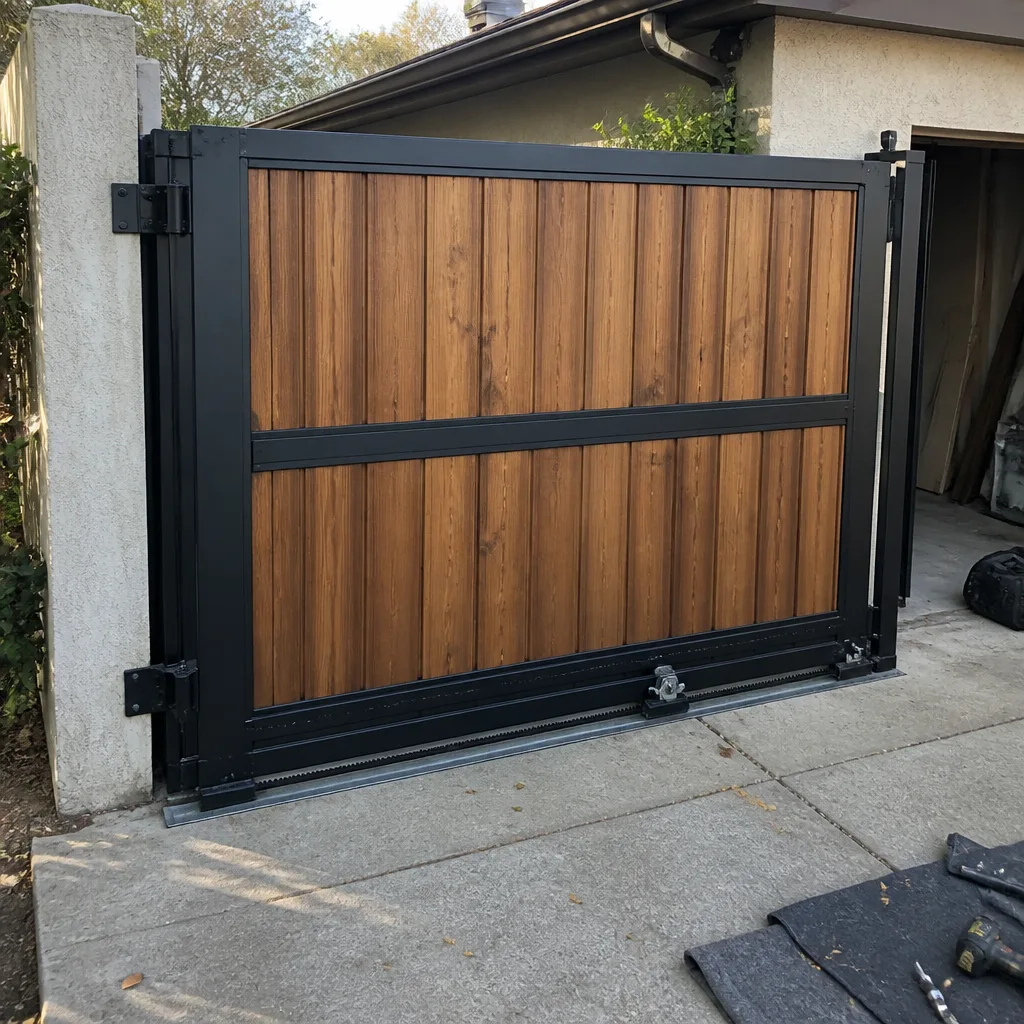 After
After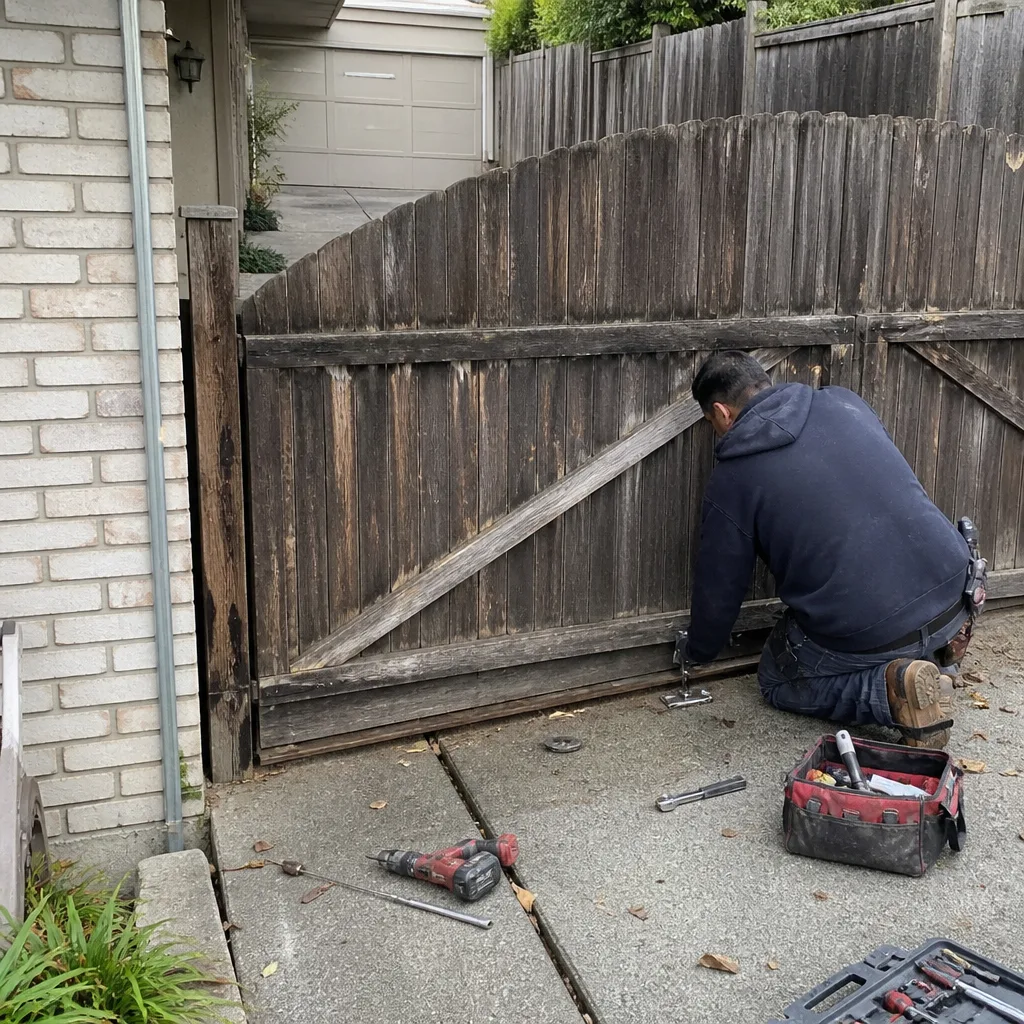 Before
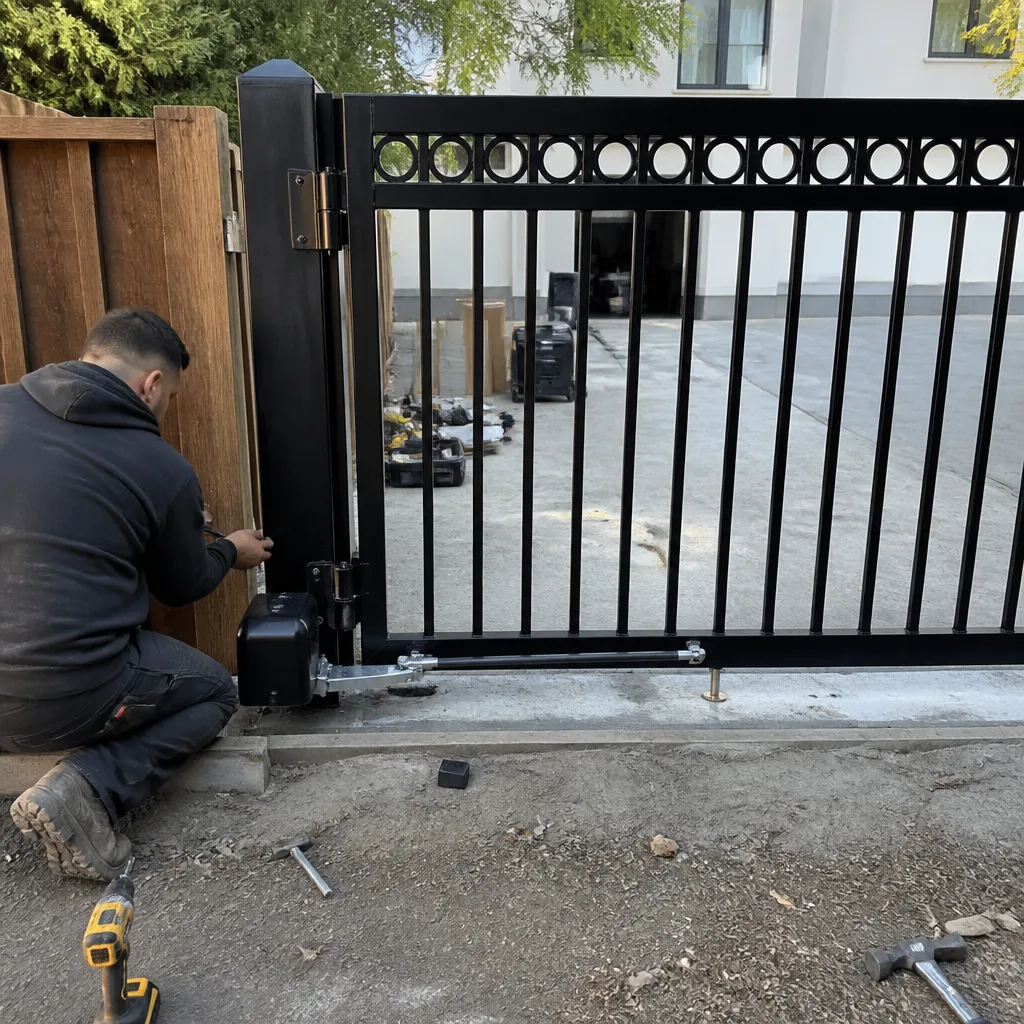 After
After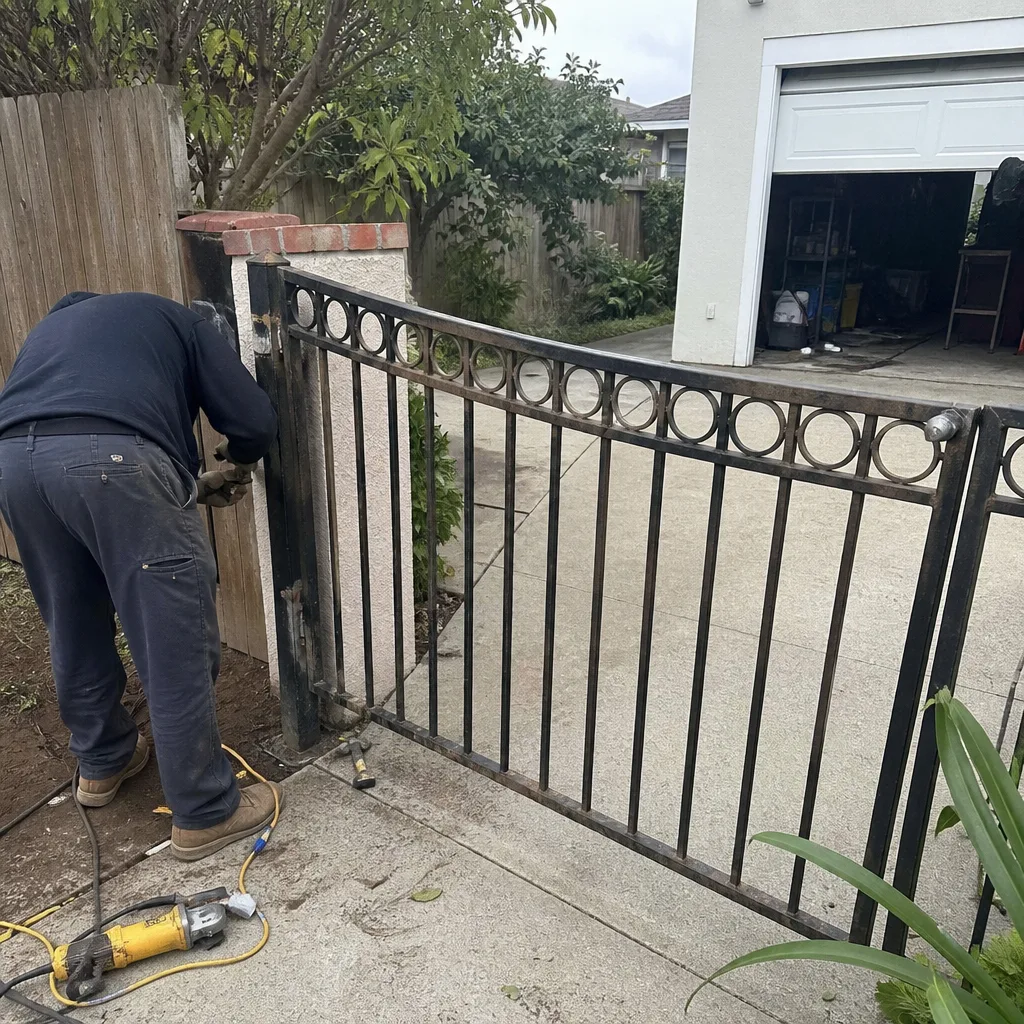 Before
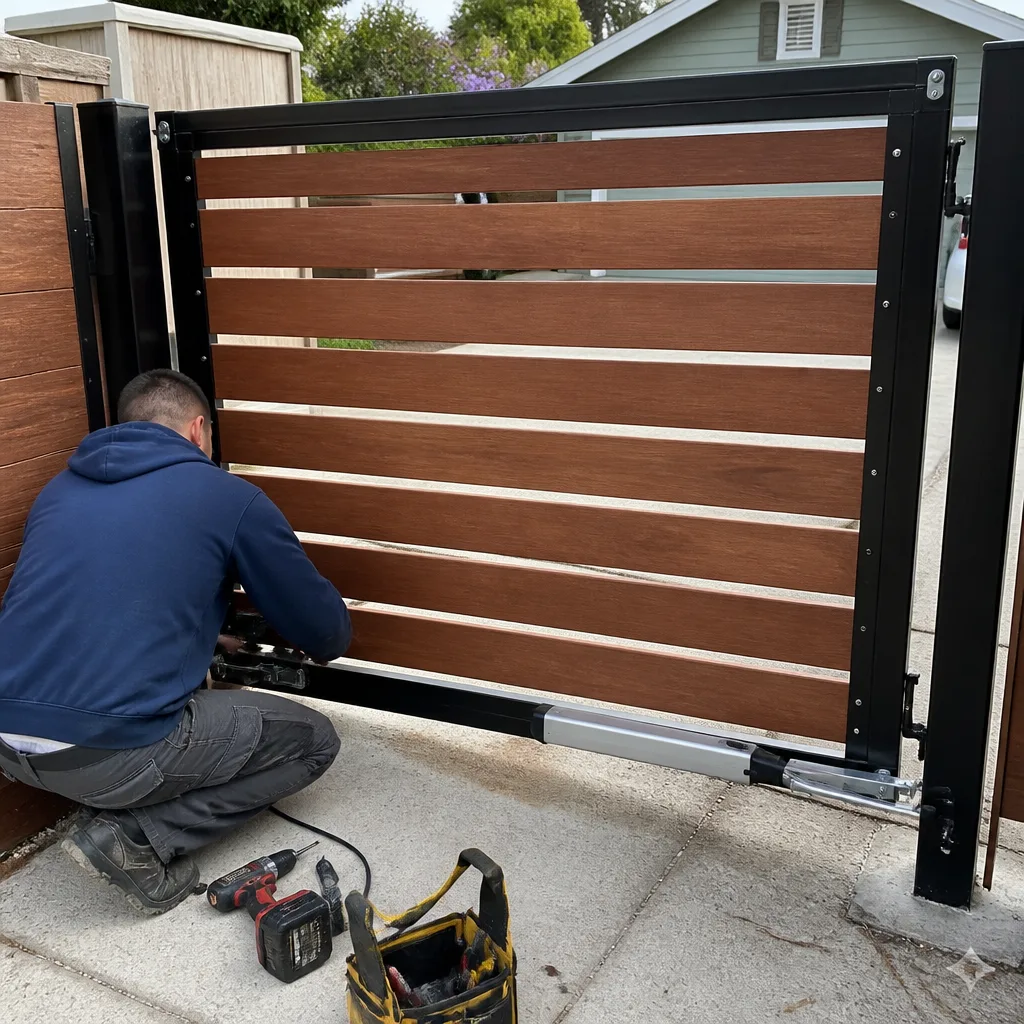 After
AfterGate Repair Maintenance Checklist for Richmond Homeowners
The maintenance step Richmond homeowners skip most often isn’t lubrication or tightening bolts. It’s writing down what the gate looked and sounded like when it was working correctly. Without that baseline, every future problem becomes a guessing game. In Richmond, where clay soils shift after winter rains and summer fog carries salt inland from the Bay, gates drift out of alignment in ways that are invisible until the motor strains or the latch fails. This checklist is built around measurements, not vague “inspect” tasks. You’ll learn how to record gap tolerances, hinge play, motor amp draw, and limit-switch positions so you, or any gate repair technician you call later, can spot drift before it becomes expensive damage.
Quick Answer
A proper gate maintenance checklist for Richmond homeowners includes quarterly measurements of latch gap, hinge play, and motor amp draw; seasonal checks for clay-soil shift after winter rains and salt corrosion after summer fog; and a written baseline document created when the gate is new or freshly repaired. Record everything with photos and store it where it survives phone upgrades.
Table of Contents
- Why Measurements Beat Vague Checklists
- Creating Your Baseline Document
- Quarterly Measurement Checklist
- Richmond Seasonal Maintenance Calendar
- What You Can Do Yourself vs. What Requires a Licensed Technician
- Storing Records So They Survive a Phone Upgrade
- Common Mistakes to Avoid
- When to Call a Professional
- Frequently Asked Questions
- The Bottom Line
 Before
 After
AfterWhy Measurements Beat Vague Checklists
Most gate maintenance guides tell you to “check the hinges” or “inspect the motor.” That language is useless. A hinge can look fine and have 3 millimeters of play that will wallow out the bracket in six months. A motor can sound normal while drawing 40% more amps than it did last quarter, indicating a track alignment problem that hasn’t shown up as noise yet.
At Vance Gate Repair Richmond home, we’ve documented 22,000+ gates since 2014. The difference between a $180 adjustment and a $2,400 motor replacement is almost always whether someone measured the drift early enough to correct it. The commercial access-control background of this company taught us that lesson: commercial sites require documented readings because they have maintenance budgets and facility managers who change jobs. Residential gates deserve the same rigor.
Here’s what a measurement-based approach catches that “visual inspection” misses:
- Hinge play measured in millimeters: A swing gate hinge with 2mm of vertical play today will have 8mm in a year, and by then the gate frame is twisting. Measure with a dial indicator or even a quality feeler gauge set.
- Latch gap to the nearest 1/8 inch: On a sliding gate in Richmond’s Point Richmond or Marina Bay neighborhoods, where fog is heaviest, a latch gap that grows from 3/8″ to 5/8″ often means the track footing is settling in clay soil. Caught early, it’s a post adjustment. Caught late, it’s track replacement.
- Motor amp draw under load: Every gate motor, whether it’s a LiftMaster, FAAC, or Mighty Mule, has a rated running amp draw. A 1/2 horsepower swing motor might draw 3.2 amps when healthy. At 4.5 amps, it’s working too hard. At 6 amps, the thermal cutoff is about to start tripping. The motor won’t sound different until it’s nearly failing.
- Limit-switch position readings: The limit switches tell the motor where to stop. On a Linear or Viking operator, these are often set with dials or digital readouts. Record the number. If it changes without anyone adjusting it, the gate is physically drifting against the stop.
The Haven Standard we operate under includes Clause 4: Evidence on every job. When we complete gate repair in Richmond, we leave you with a photo log and written readings. That document becomes your baseline. If you don’t have one yet, the next section shows you how to create it yourself.
Creating Your Baseline Document
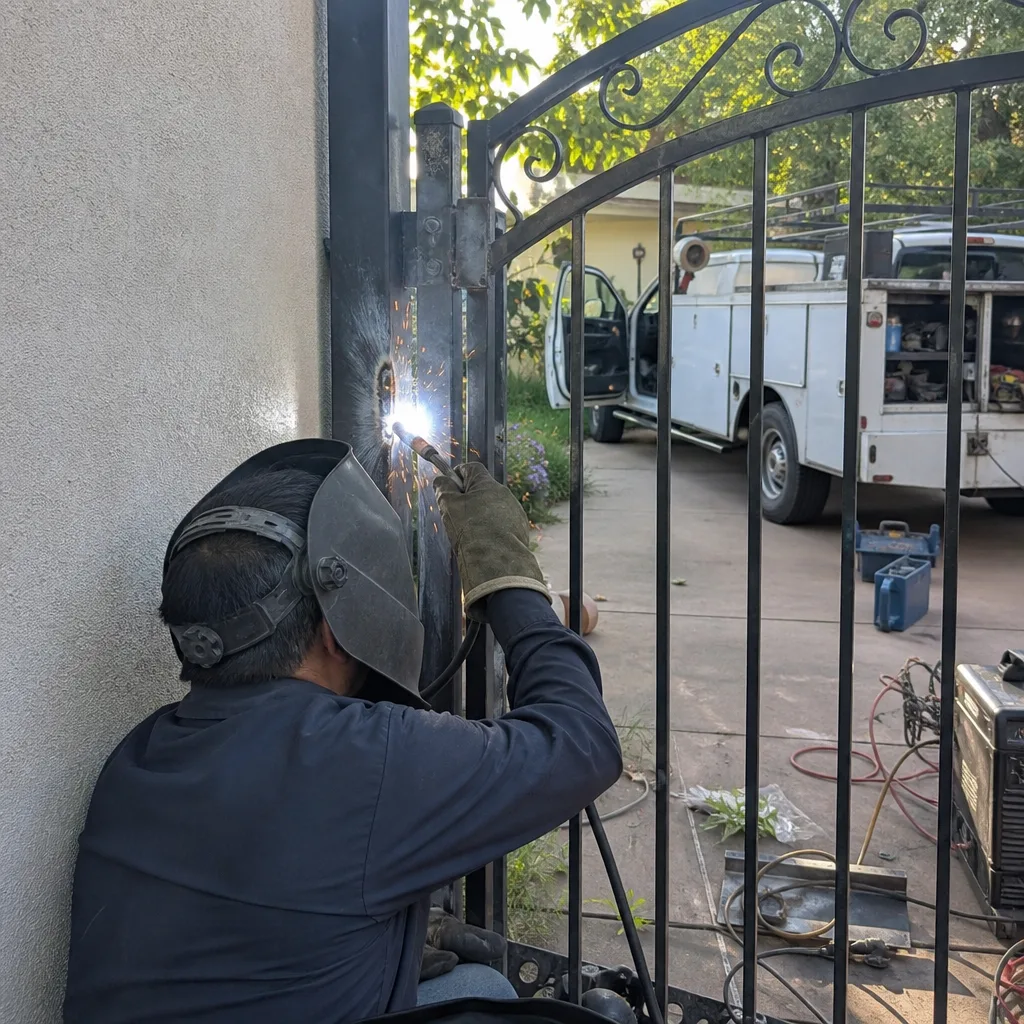
A baseline document is a snapshot of your gate working correctly. It should be created when the gate is new, when a major repair is completed, or when you’ve just finished adjusting everything yourself. For details on local requirements, see our guide on Gate Repair Permits, Codes & Inspections in CA: What You Need to Know. Without it, every future inspection is comparing the gate to memory, and memory is unreliable.
Here’s what to include, and how to record it:
- Photograph the gate from three angles: Full closed position showing latch engagement, full open position showing clearance, and a detail of the motor/operator mounting. Use your phone, but immediately back these up to cloud storage with a dated folder name.
- Measure and record latch gap: With the gate fully closed, measure the gap between the latch pin and the receiver on the post. Record to the nearest 1/8 inch. Note whether the gate is in direct sun or shade when measured, as thermal expansion affects metal frames.
- Measure hinge play: For swing gates, grasp the free end and lift vertically. Measure the movement at the latch edge with a ruler or caliper. For residential gates, under 1/16 inch is excellent, 1/8 inch is acceptable, 3/16 inch needs attention. Record the measurement and the date.
- Record motor amp draw: This requires a clamp meter on one power lead while the gate operates. If you don’t own one, note in your baseline that this was not measured, and plan to have a technician record it on the next service call. Many motors have a data plate showing rated amps; photograph that plate for reference.
- Document limit-switch settings: For operators with digital displays (common on FAAC and BFT systems), photograph the screen showing open and closed limit values. For dial-based systems (older Mighty Mule units, some LiftMaster models), record the dial position or count the clicks from zero.
- Note the sound: Record a 10-second video of a full open-and-close cycle. Playback comparison is the fastest way to detect bearing wear, track debris, or motor strain before you have words for what’s wrong.
- Record the environment: Note soil type if known (Richmond’s hills have clay-heavy soils that expand and contract dramatically), drainage pattern, and any nearby trees whose roots could affect footings.
Store this document in at least two places: a cloud folder you control, and a printed copy in a file labeled with your address and “Gate Baseline [Date].” The printed copy matters because phones get replaced, accounts get locked, and apps stop working. A physical folder in your house survives technology changes.
Quarterly Measurement Checklist
Every three months, run through these measurements and compare to your baseline. The entire process takes 20 minutes once you’re practiced. Do it in March, June, September, and December to align with Richmond’s seasonal stressors.
Structural Measurements
- Latch gap: Measure again, same point, same conditions. A change of 1/8 inch or more indicates movement. Check the post footing first, then hinge wear.
- Hinge play: Same lift test. Growth of 1/16 inch or more means the pin is wearing or the bracket is loosening.
- Track level (sliding gates): Use a 4-foot level on the track surface. In Richmond, where winter rains saturate clay soils, we’ve seen tracks settle 1/4 inch in a single season in the El Sobrante hills and Kensington-adjacent areas. Note any high or low spots and compare to your baseline photos.
- Gate frame square: Measure diagonally corner to corner. On a rectangular gate, these measurements should be within 1/4 inch. A growing difference means the frame is racking, usually from hinge or wheel problems.
Operator Measurements
- Amp draw: If you have a clamp meter, test under normal load. Increase of 15% or more from baseline means something is binding, the track is dirty, or the motor bearings are degrading.
- Limit-switch consistency: Run three full cycles and check that the gate stops in exactly the same place each time. Drift of more than 1 inch means the limit mechanism is slipping or the gate is physically resisting the stop position.
- Photo-eye alignment (if equipped): The infrared beam that stops the gate if something crosses the path should have indicator lights showing solid alignment. Note which LEDs are lit and whether they flicker during gate travel. A flicker often means vibration is moving one sensor; tighten the bracket and measure the gap to the baseline.
Environmental Checks
- Debris in track or path: Remove leaves, gravel, or animal droppings. In Richmond’s hillside neighborhoods, oak leaf drop in fall and acorn debris in winter are common culprits for sliding gate track blockage.
- Vegetation clearance: Branches growing into the gate path will eventually trigger the photo-eye or physically block travel. Maintain 6 inches of clearance on all sides.
- Drainage around footings: Standing water at the post base accelerates corrosion and undermines concrete. French drains or simple grading corrections prevent most footing failures we see in Richmond’s clay-soil areas.
Richmond Seasonal Maintenance Calendar
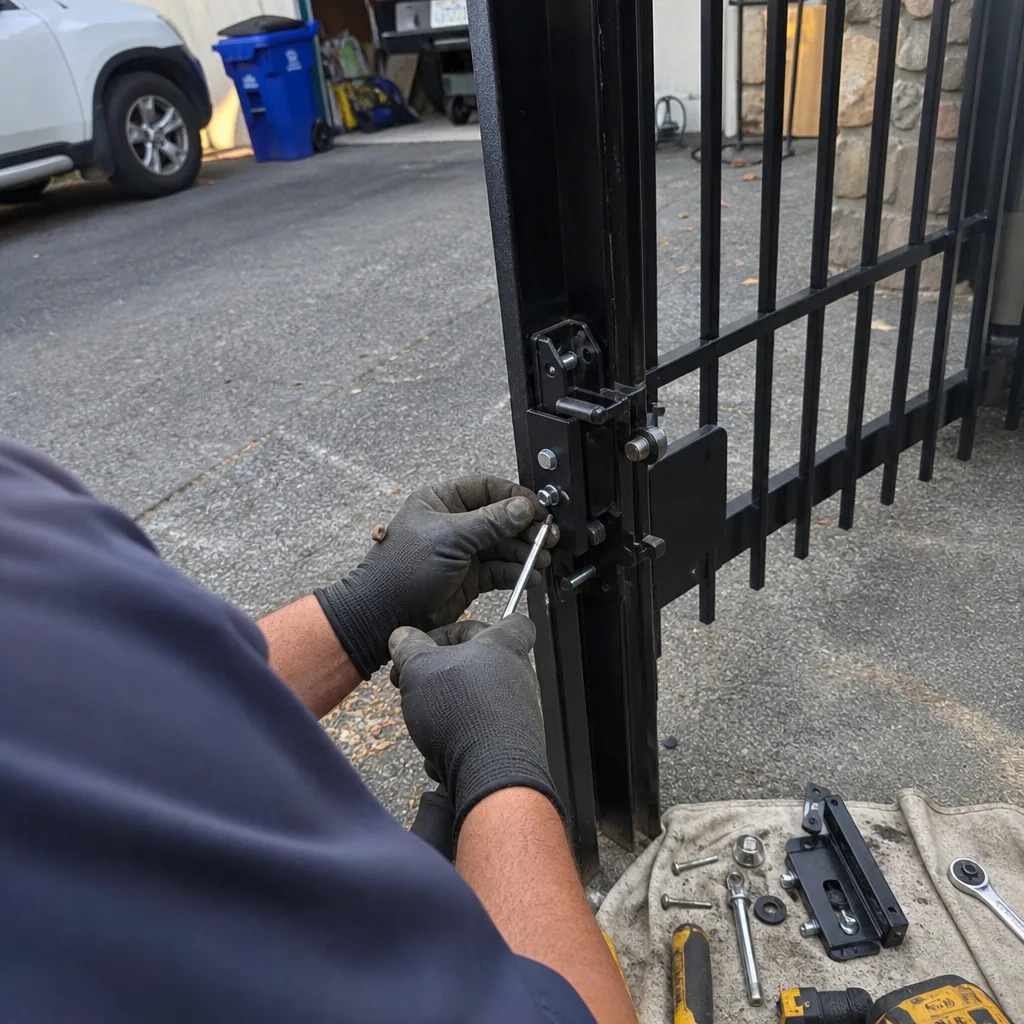
Richmond’s climate creates specific, predictable stress on gates that generic checklists ignore. The Bay moderates temperature but delivers unique corrosion and soil challenges.
January-March: Post-Rain Clay-Soil Shift
Richmond’s winter rains saturate the clay-heavy soils common in the East Bay hills. Saturated clay expands; drying clay contracts. This cycle moves fence and gate posts. In our experience, March is when we receive the most “my gate won’t latch anymore” calls from Richmond homeowners. The post has tilted 1/2 inch in wet soil, and the latch no longer aligns.
What to measure in March: Latch gap, post plumb (use a level on two faces of the post), and track level for sliding gates. Compare to your September readings. Any movement should be corrected before the soil dries hard in summer, making adjustment more difficult.
April-June: Corrosion Inspection After Fog Season
Richmond’s summer fog carries salt from the Bay, particularly in neighborhoods west of I-80 and along the shoreline. This accelerates corrosion on steel components. We’ve replaced hinge pins in Marina Bay that were serviceable in fall and frozen by June.
What to inspect in June: Hinge pins and brackets for rust scale, chain or belt drives for corrosion, and any exposed wiring for green copper oxidation. Photograph any rust and measure pit depth with a pick or probe. Surface rust is cosmetic; pitting deeper than 1/32 inch means the part is losing strength.
July-September: Thermal Expansion and UV Degradation
Iron and steel expand in heat. A gate that latches perfectly at 8 AM may bind at 4 PM on a 90-degree day. This is normal if slight; problematic if the gate is forcing the motor against a physical stop.
What to check in September: Run the gate at the hottest part of the day and listen for motor strain at the limits. Check vinyl or rubber components (cable guides, bumpers, some belt drives) for UV cracking. The Bay Area’s intense sun, combined with fog moisture, creates rapid UV degradation cycles.
October-December: Pre-Rain Preparation
Clear drains, gutters, and grading around gate footings before the rains return. Test the photo-eye with a deliberate obstruction; wet leaves in fall are the most common cause of false triggers. Lubricate hinges with a product rated for outdoor use; avoid heavy grease that traps grit.
What You Can Do Yourself vs. What Requires a Licensed Technician
California code and practical safety divide gate maintenance into homeowner-appropriate tasks and those requiring a licensed professional. The line is not about skill; it’s about liability, electrical safety, and the force that automated gates can generate.
Homeowner-Appropriate Tasks
- Visual inspection and photography
- Measurement recording (gap, play, level)
- Debris removal from track and path
- Vegetation trimming for clearance
- Photo-eye cleaning and basic alignment (no wiring disconnection)
- Lubrication of hinges and rollers with appropriate products
- Drainage and grading corrections around footings
Tasks Requiring a Licensed Technician
- Electrical work: Any disconnection of 120V or low-voltage control wiring must be performed by a C-10 licensed electrician or a gate technician working under appropriate licensing. This includes replacing photo-eye wiring, motor power connections, or access control devices.
- Spring or counterbalance adjustment: Some heavy swing gates use torsion or extension springs to assist the motor. These are under significant tension and can cause serious injury if released improperly. Do not attempt.
- Limit-switch recalibration after mechanical repair: If you’ve adjusted hinges or tracks, the motor limits must be reset. Doing this incorrectly can cause the gate to overtravel, damaging the operator or creating an entrapment hazard.
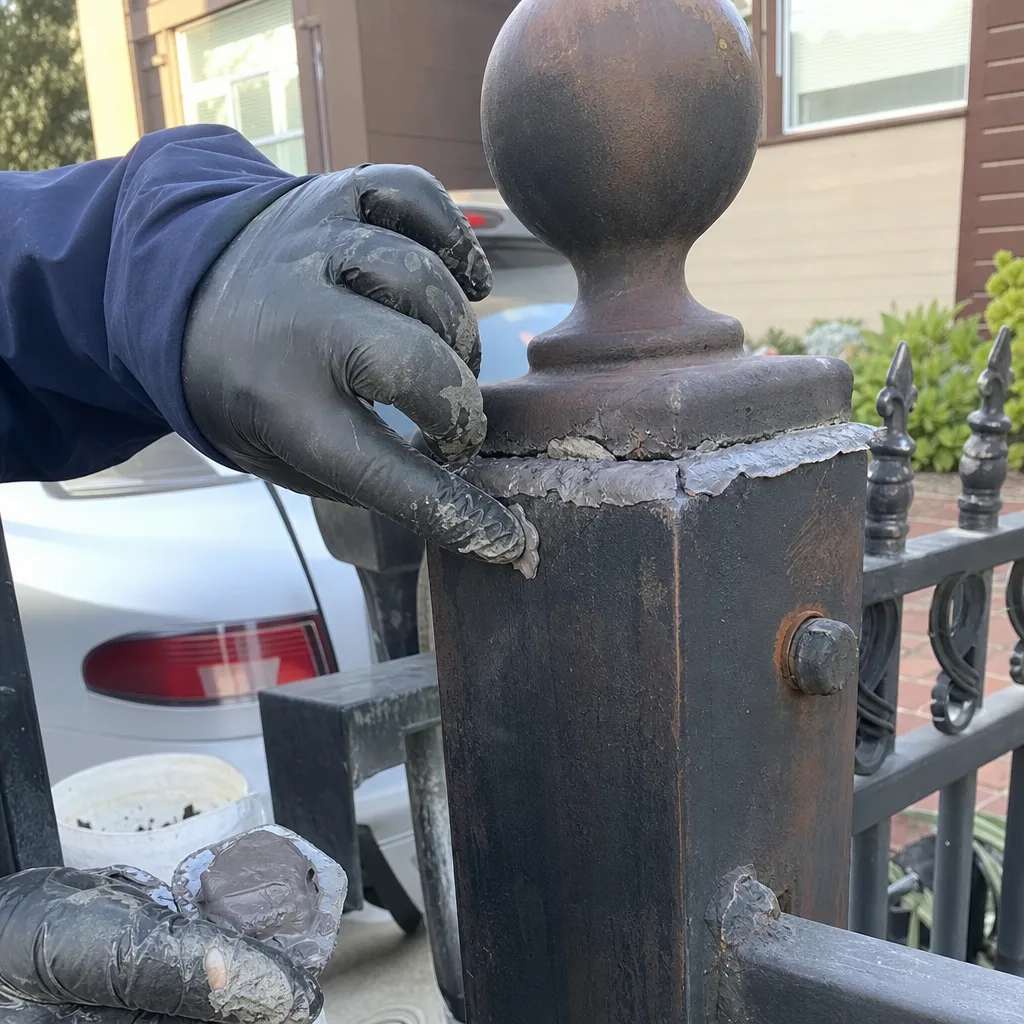
- Welding or structural repair: Any load-bearing weld on a gate frame affects the structure’s integrity. California requires licensed welding for structural repairs on commercial gates; residential gates should follow the same standard for safety.
- Automation system programming: Changing force settings, obstacle sensitivity, or access codes on modern operators (LiftMaster MyQ, FAAC E045, BFT Thalia) affects safety compliance. These should be adjusted by a technician who can test with calibrated equipment.
For gate motor and opener service in Richmond, we document every adjustment with before-and-after readings under Haven Standard Clause 4. If you’re unsure whether a task is DIY-appropriate, call for a free second opinion. We’ll review your baseline document and tell you what’s safe to handle yourself.
Storing Records So They Survive a Phone Upgrade
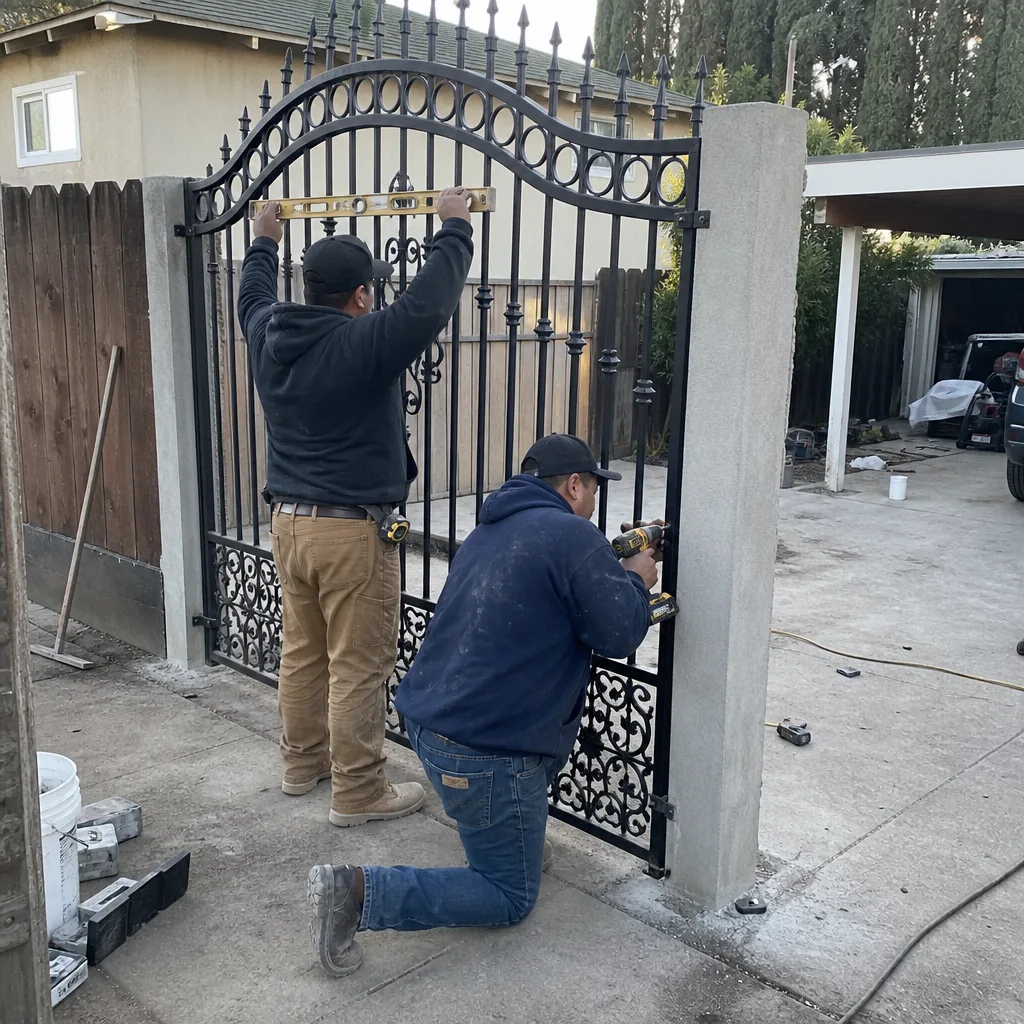
The best baseline document is useless if it’s trapped on a phone you replace every three years. Here’s a storage system that works:
- Cloud folder structure: Create a folder named “[Your Address] Gate Records.” Inside, subfolders by year: 2024, 2025, etc. Each quarterly check gets a dated subfolder with photos, a text file of measurements, and any technician invoices.
- Standardized filename format: Use “YYYY-MM-DD [measurement type].” For example: “2024-03-15 LatchGap.txt” or “2024-06-15 HingePlay.jpg.” This sorts chronologically and survives any device.
- Printed backup: Once yearly, print a summary sheet with all four quarters’ key measurements and store it in a physical file. Label the file with your address and “Gate Maintenance Records.”
- Shared access: If multiple adults in the household maintain the property, ensure the cloud folder is shared with all relevant accounts. The person who created the baseline may not be the one who notices the problem.
- Technician handoff: When you call for service, share the relevant folder or print the most recent measurements. A technician who knows the gate was drawing 3.2 amps six months ago and is drawing 5.1 amps today will diagnose faster and more accurately than one starting from zero.
Under Haven Standard Clause 4, our technicians upload their photo records to your job file and can provide you copies in whatever format you prefer. We’ve had Richmond homeowners hand us decade-old measurement logs that made diagnosis nearly instantaneous.
Common Mistakes to Avoid
- Using “it looks fine” as a measurement: In Richmond’s Point Richmond neighborhood, we’ve seen gates that “looked fine” for two years while hinge play grew from 1/16 inch to 3/8 inch. The homeowner noticed only when the gate frame cracked from the racking stress.
- Lubricating without cleaning first: Grease on dirty hinges traps abrasive grit. The result is accelerated wear, not reduced friction. Clean with a solvent, dry completely, then apply lubricant sparingly.
- Ignoring seasonal timing: Checking for clay-soil shift in August, when the soil is baked hard, gives false confidence. The damage happened in March; you just can’t see it anymore. Align your checks with the actual stress seasons.
- Storing records only on a phone: Every year, we meet homeowners who had perfect baseline photos on a phone that was dropped, stolen, or replaced without transfer. Cloud storage with printed backup is the only reliable system.
- Adjusting limits without checking the mechanical cause: If the gate isn’t reaching the closed position, the limit switch may need adjustment, or the track may be blocked, or the hinges may be binding. Adjusting limits to compensate for mechanical problems masks the real issue and strains the motor.
- Using the wrong lubricant on electrical components: WD-40 is a solvent, not a lubricant, and it degrades some plastics used in photo-eye housings. Use manufacturer-recommended products; when in doubt, ask before spraying.
- Skipping documentation after professional service: When a technician completes gate installation in Richmond or a major repair, request the final settings and measurements in writing. If they won’t provide them, that’s information about their service quality.
When to Call a Professional
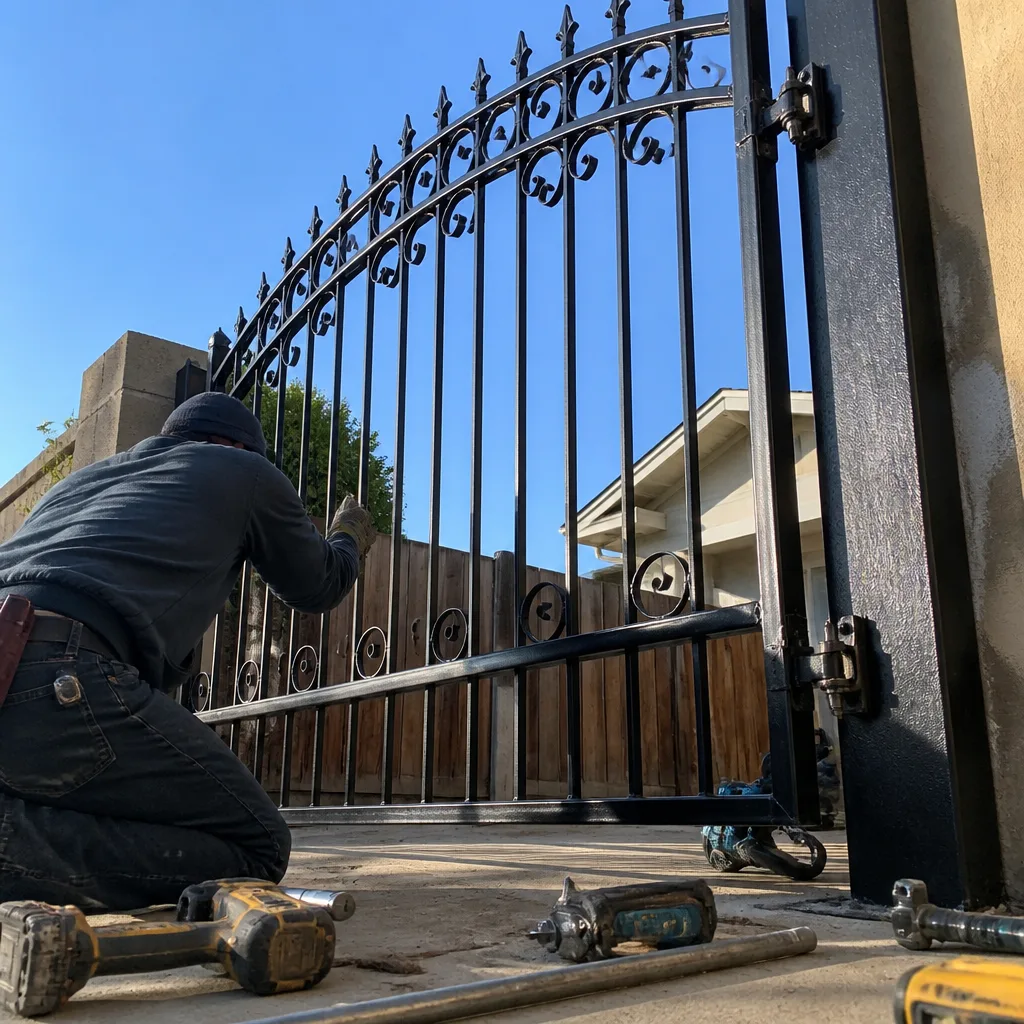
Call a licensed gate technician when measurements change significantly from baseline, when the motor makes new noises, when the gate binds or stalls, or when any electrical component needs replacement. In California, gate operators are classified as machines with entrapment potential; repairs affecting force settings or safety devices require documented testing.
Vance Gate Repair Richmond offers free estimates in Richmond. We’ll review your baseline document, measure current conditions, and provide a written scope and price before any work begins under Haven Standard Clause 1. Call (510) 944-0953. A live person answers 24 hours a day, seven days a week.
Frequently Asked Questions
Most gate repairs in Richmond range from $180 for hinge adjustment and limit-switch recalibration to $650 for motor replacement on a standard residential swing gate. Sliding gate track realignment after soil shift typically runs $340-$520, depending on whether the post footing needs resetting. We provide a written price before any work starts. Call (510) 944-0953 for an exact quote on your specific gate.
You can handle visual inspection, measurement recording, debris removal, and basic lubrication. Any work involving electrical disconnection, spring tension, limit-switch recalibration after mechanical changes, or welding requires a licensed technician under California code. The force settings on automated gates affect entrapment safety and must be tested with calibrated equipment after any adjustment.
Quarterly measurements are the minimum for Richmond’s clay-soil and salt-fog environment. Check structural measurements in March after winter rains, corrosion in June after fog season, thermal behavior in September during peak heat, and drainage before the October-December rainy period returns.
Photograph the gate fully closed showing latch engagement, fully open showing clearance, the motor/operator mounting and data plate, the limit-switch display or dial position, and the photo-eye indicator lights. Also record a 10-second video of a full cycle for sound comparison later.
Vance Gate Repair services nine major automation brands: LiftMaster, FAAC, BFT, Linear, Viking, Ghost Controls, DoorKing, Elite, and Mighty Mule. We repair rather than replace whenever possible, and we carry parts for common failures across all nine brands. If your operator is from another manufacturer, we can still evaluate it and source parts if repair is economical.
If any repair we complete is not right, we make it right at no additional charge within one full year. No argument, no fee, no expiration date within that window. The promise is documented on every invoice under Haven Standard Clause 3.
The Bottom Line
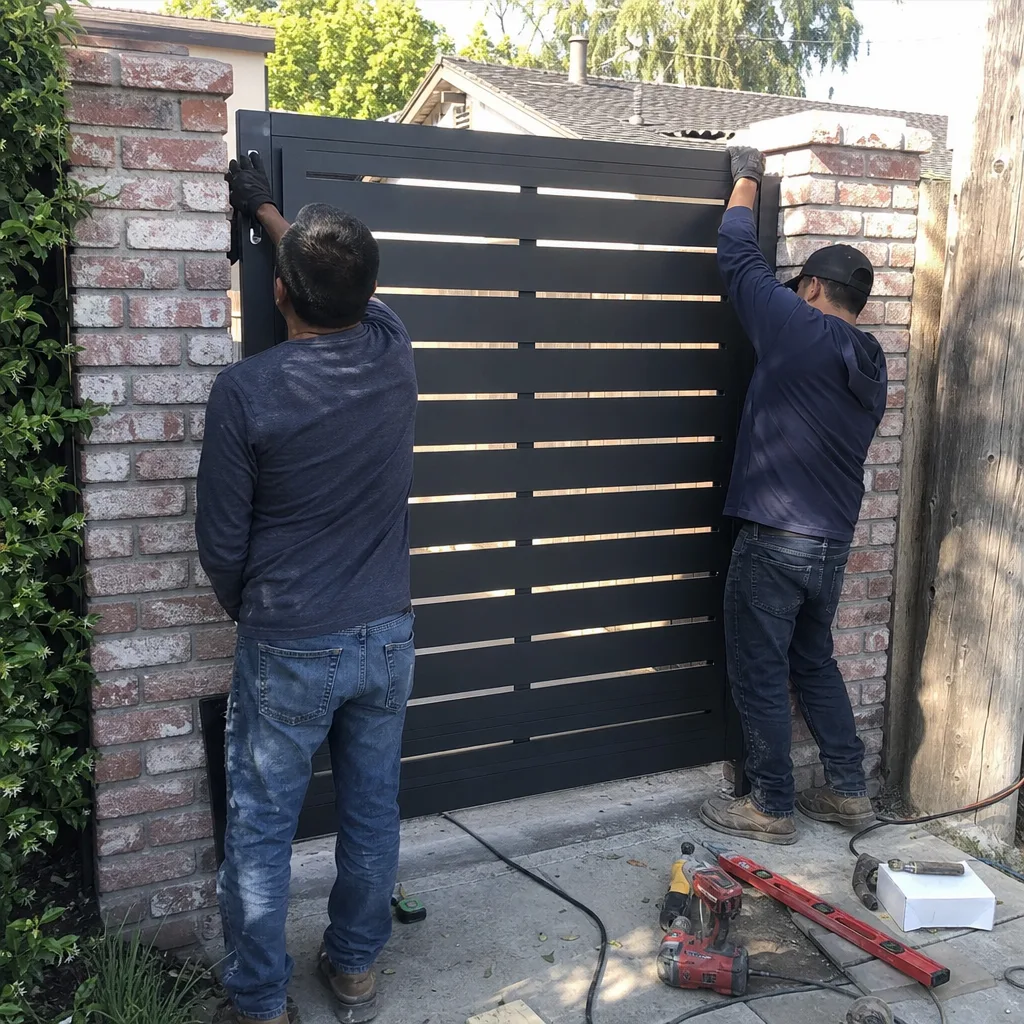
A gate maintenance checklist only prevents expensive repairs if it produces measurements you can compare over time. Record latch gap, hinge play, motor amp draw, and limit-switch positions when your gate is healthy. Re-check quarterly, aligned with Richmond’s seasonal stressors: clay-soil shift after winter rains, salt corrosion after summer fog, thermal expansion in heat, and drainage before the wet season returns. Store records in cloud and printed form so they survive technology changes. Know which tasks are homeowner-appropriate and which require a licensed technician for safety and code compliance. And when you need professional service, demand written prices before work starts and documented evidence when the technician leaves. For more guides & resources, explore our blog.
Written by Adrian Vance, Owner at Vance Gate Repair Richmond, serving Richmond since 2014.