
Last updated September 22, 2026
Free on-site gate assessment - hinges, posts, and your LiftMaster or Nice gate operator checked before anything is quoted
The assessment is free and the quote is the invoice.

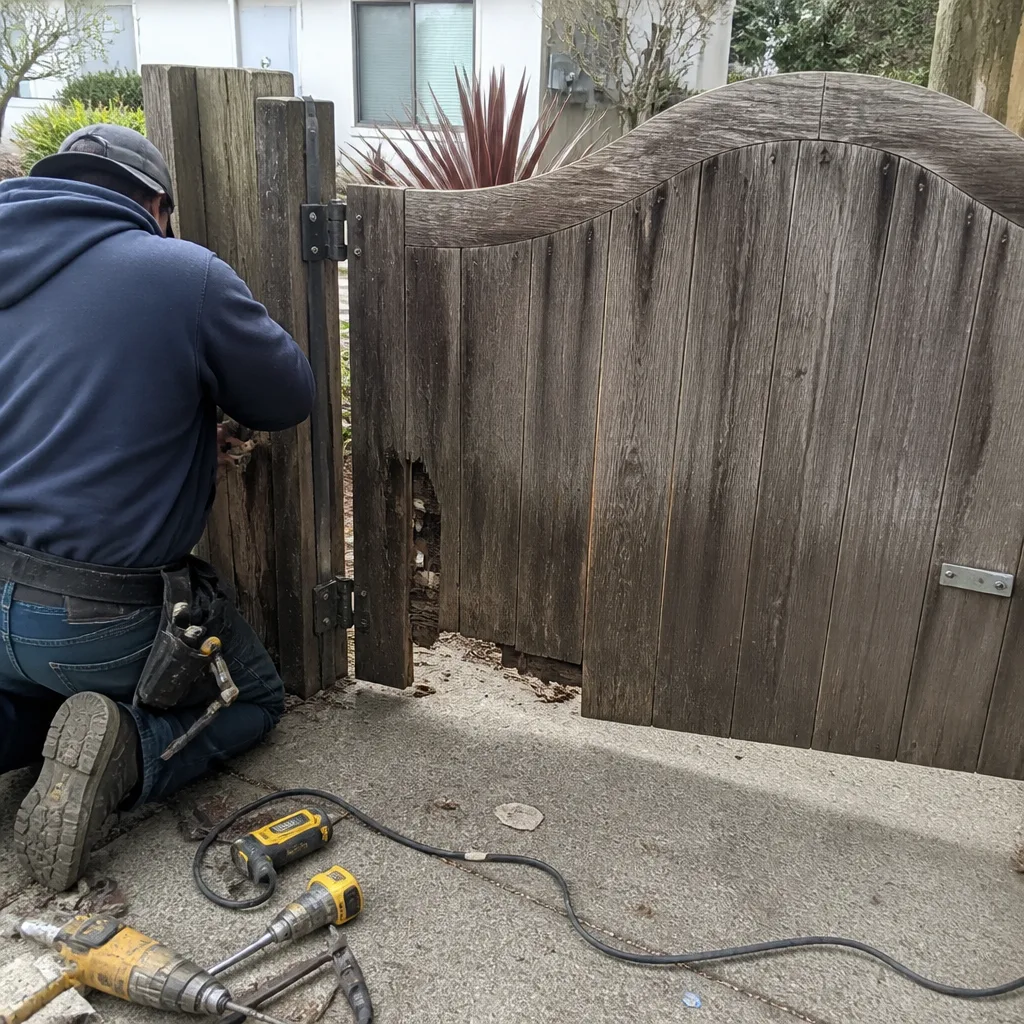 Before
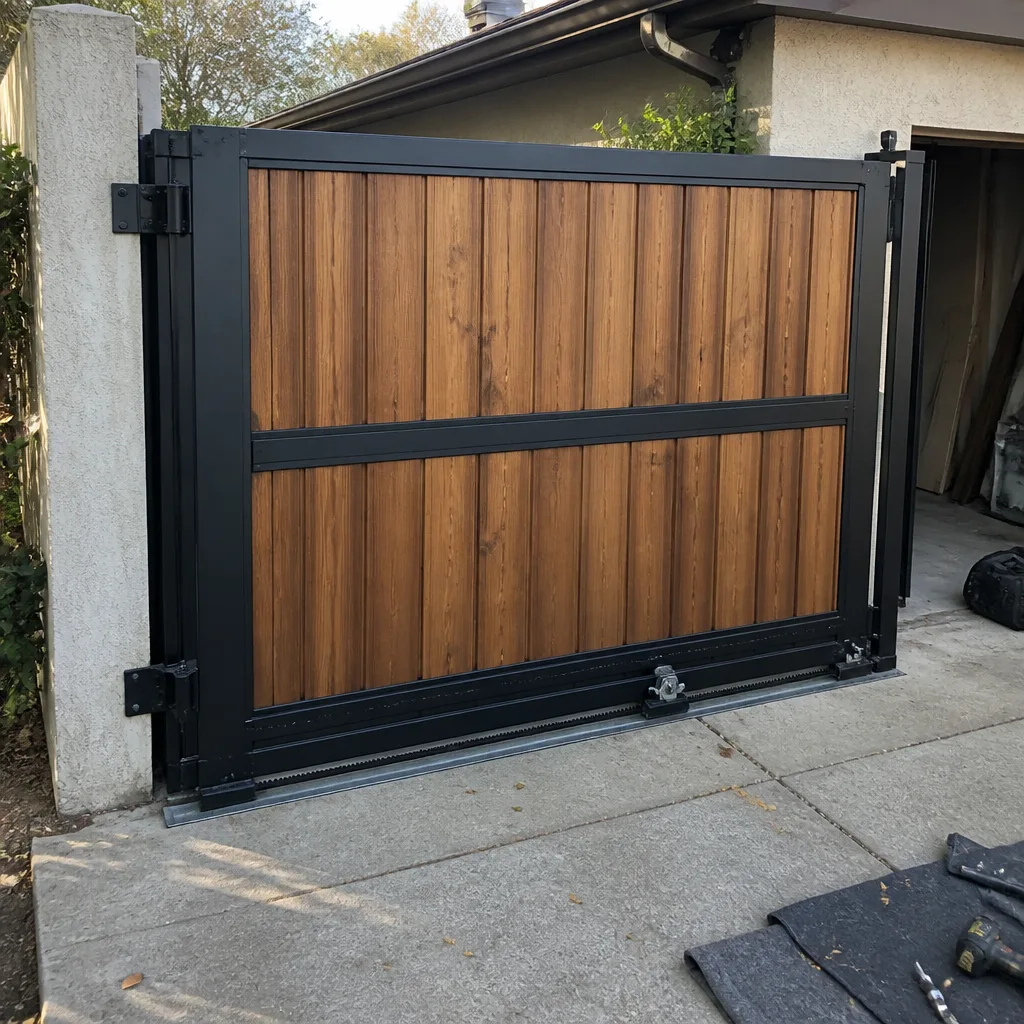 After
After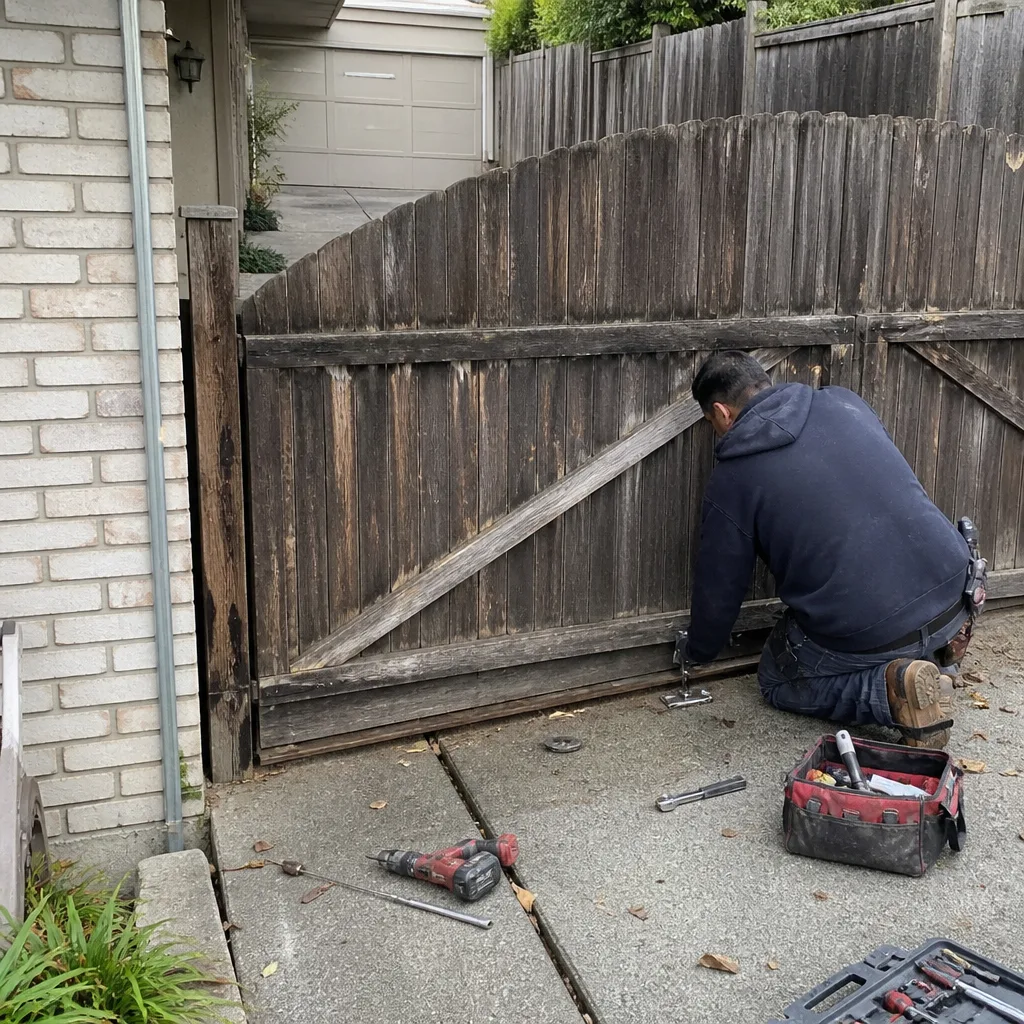 Before
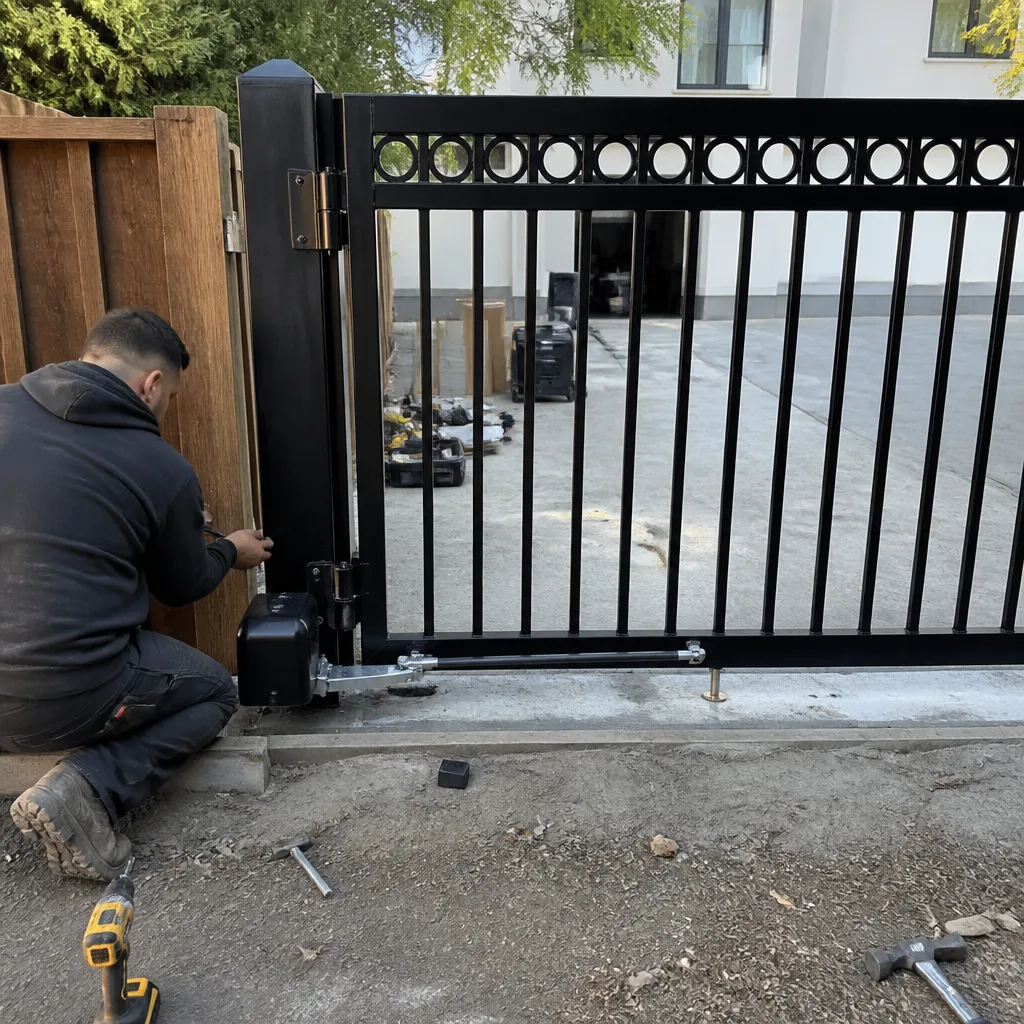 After
After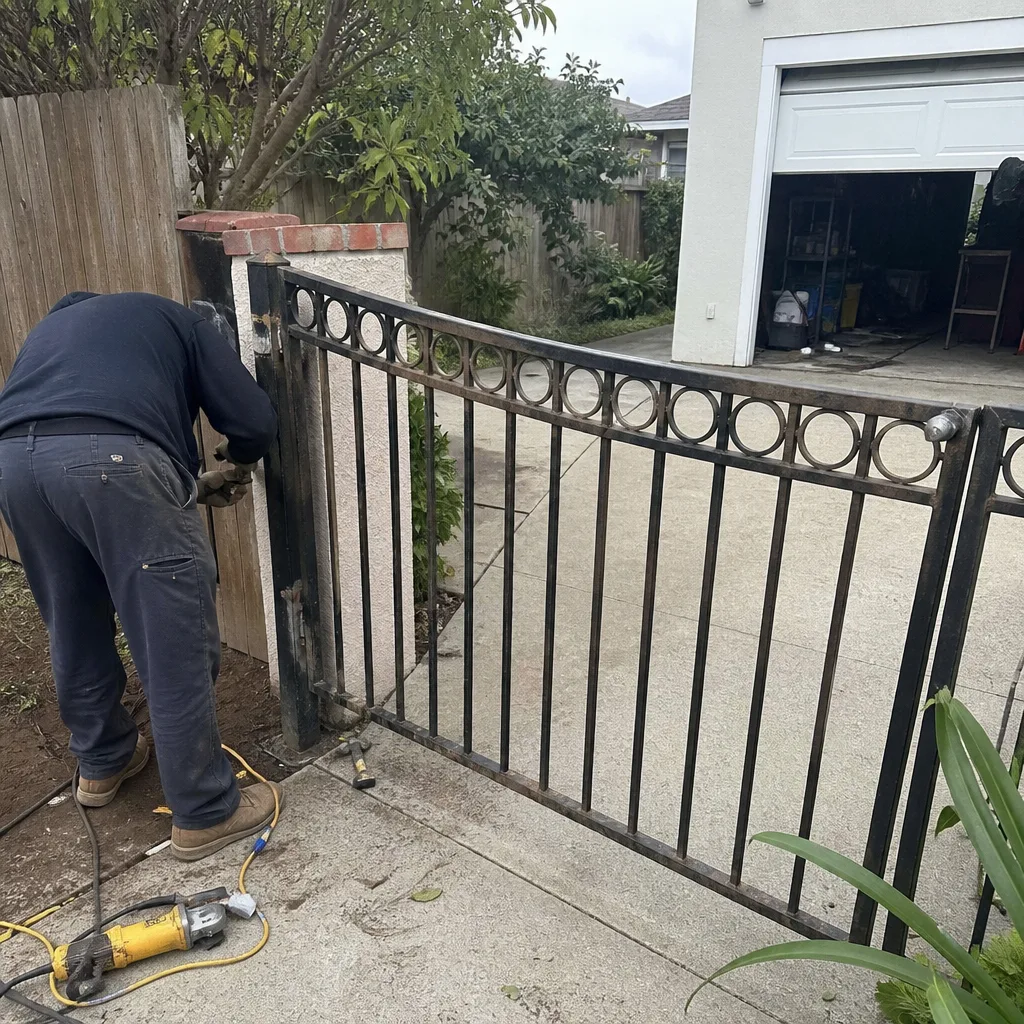 Before
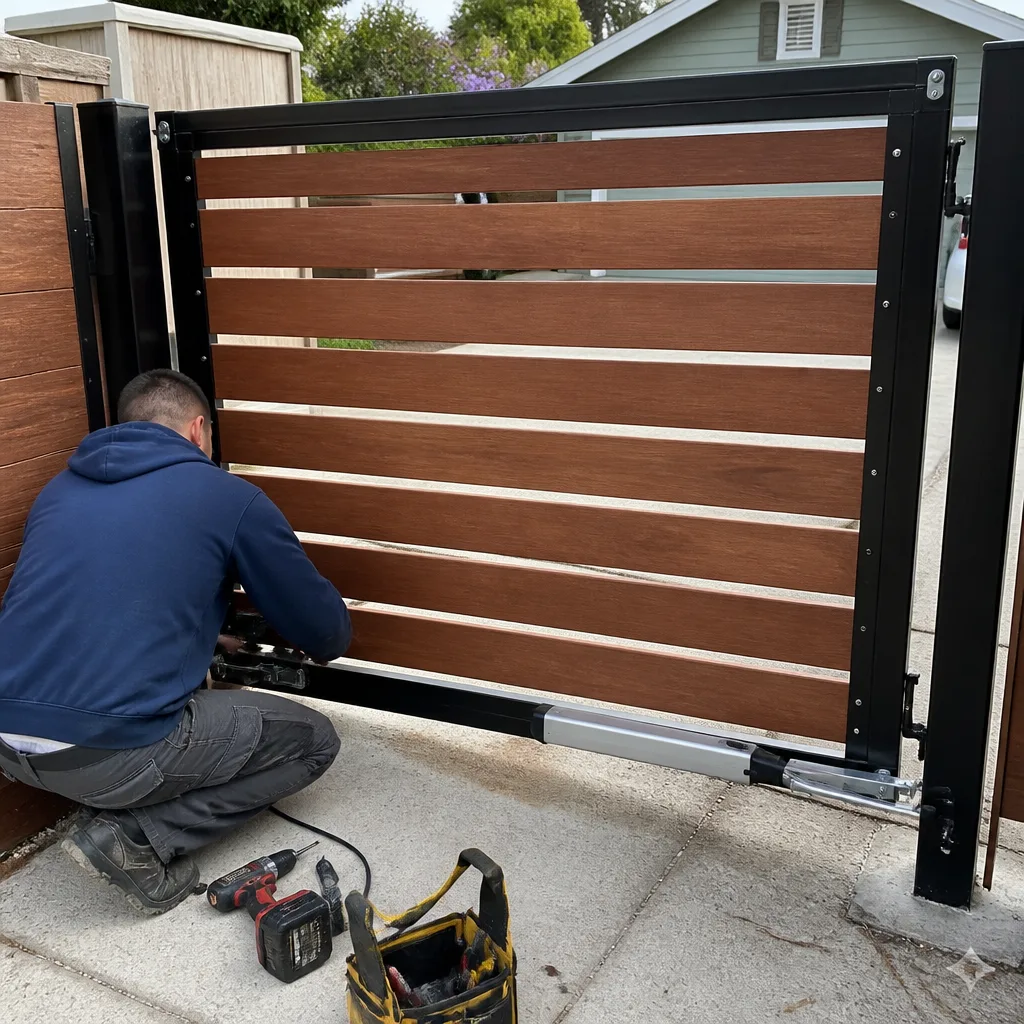 After
AfterDIY vs Professional Gate Repair: The Richmond Homeowner’s Decision Guide
A Richmond homeowner can legally replace their own gate operator, but if that operator fails and injures someone, the absence of a UL 325 compliance record becomes a liability question that a DIY YouTube tutorial did not prepare them for. In our experience across Richmond’s neighborhoods, from the hillside homes in Point Richmond to the newer developments in Marina Bay, the repair that looks simple on video often hides a documentation requirement that determines whether your homeowner’s insurance covers a claim. This guide draws the line at liability, not difficulty, and shows you exactly which repairs are genuinely yours to attempt and which ones transfer legal risk to a licensed professional.
Quick Answer
Most Richmond homeowners can safely handle manual hardware replacement and cosmetic repairs themselves. Any work involving gate operator wiring, entrapment protection devices, or post resetting in Richmond’s expansive clay soil requires a licensed contractor who can issue a UL 325 compliance record. Without that documentation, your homeowner’s insurance may deny a claim if the gate injures a visitor, even if the repair was technically done correctly.
Table of Contents
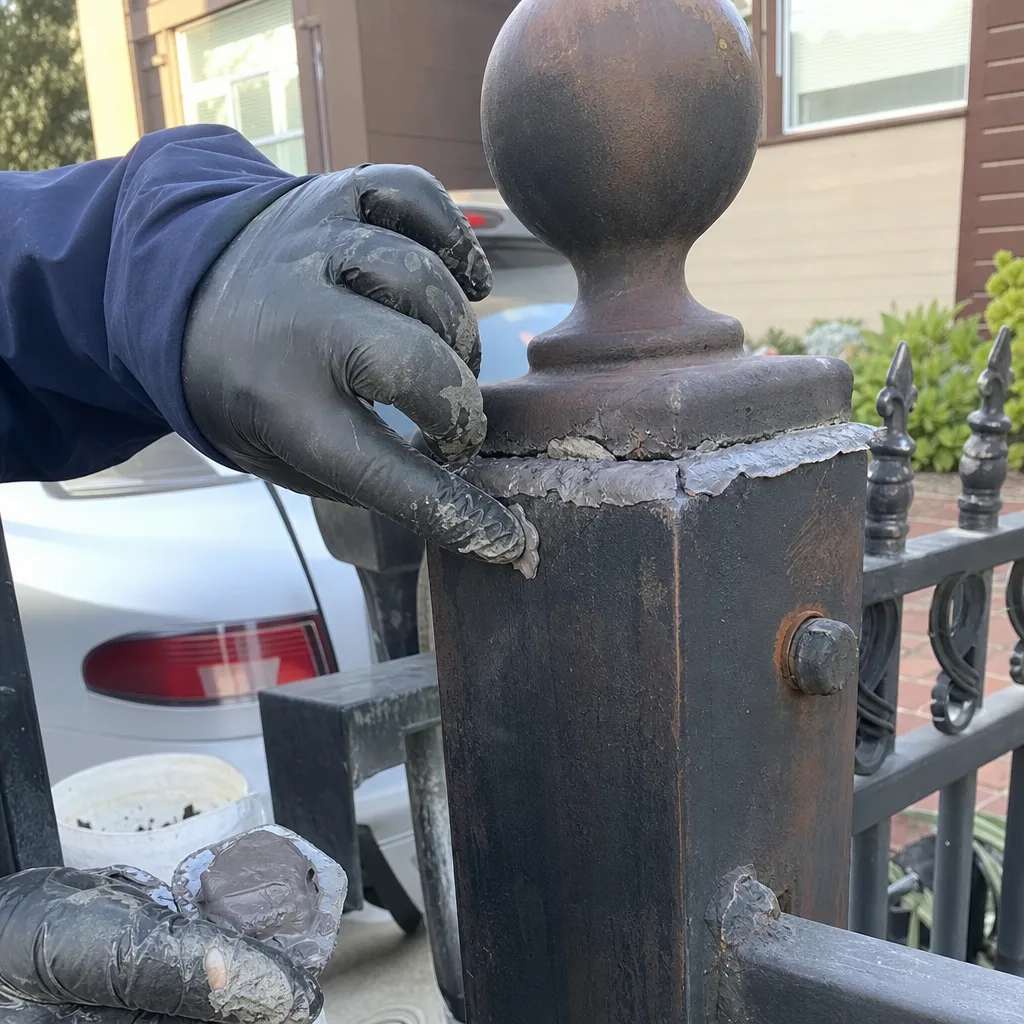
- What Richmond Homeowners Can Legally DIY
- UL 325 and the Documentation Gap That Exposes You
- Repairs That Save Money Without Meaningful Risk
- Repairs Where DIY Risk Exceeds Cost Savings
- Richmond’s Climate and Soil Factors That Change the Math
- If You DIY, Create Documentation That Protects You
- Common Mistakes to Avoid
- When to Call a Professional
- Frequently Asked Questions
- The Bottom Line
 Before
 After
AfterWhat Richmond Homeowners Can Legally DIY
California contractor law draws a clear boundary around electrical and structural work, but it leaves significant room for homeowners to maintain their own gates. The repairs below do not require a C-61/D-49 (Limited Specialty) contractor’s license and do not trigger UL 325 documentation requirements because they do not alter the operator’s safety systems or the gate’s structural mounting.
Here is what you can legally and safely handle yourself:
- Manual lock and latch replacement. If the slide bolt on your wrought-iron pedestrian gate has seized or the magnetic latch on your pool gate has weakened, replacement is straightforward. Buy the matching hardware, note the screw pattern, and swap it. No electrical connection, no safety system.
- Cosmetic panel repair. Minor rust spots on steel gates, small wood filler applications on cedar driveway gates, or touch-up paint after a scrape. Richmond’s marine air accelerates surface corrosion, so this is recurring maintenance, not a one-time fix.
- Vegetation and debris clearing from photo-eye paths. The infrared beam (photo-eye) that stops a gate if something crosses the path needs a clear line of sight. Trimming back fescue that has grown into the beam path, or wiping spiderwebs from the lens with a dry cloth, restores function without touching the safety system’s calibration.
- Hinge lubrication and tension adjustment. Squeaking or binding on a manual swing gate often traces to dry hinge pins. A lithium-based grease and a wrench to snug the bolt are sufficient. Stop if the gate post itself moves; that indicates footing failure, which is structural.
- Remote battery replacement and reprogramming. Most operators, including Linear and Mighty Mule models common in Richmond’s 1990s-era subdivisions, allow homeowner reprogramming through a clearly marked “Learn” button. The manual, or the manufacturer’s website, provides the sequence. This does not alter the entrapment protection settings.
The common thread: these repairs do not change how the gate detects obstacles, how the operator responds to resistance, or how the gate is anchored to the earth. They are mechanical maintenance on parts that move but do not decide.
UL 325 and the Documentation Gap That Exposes You
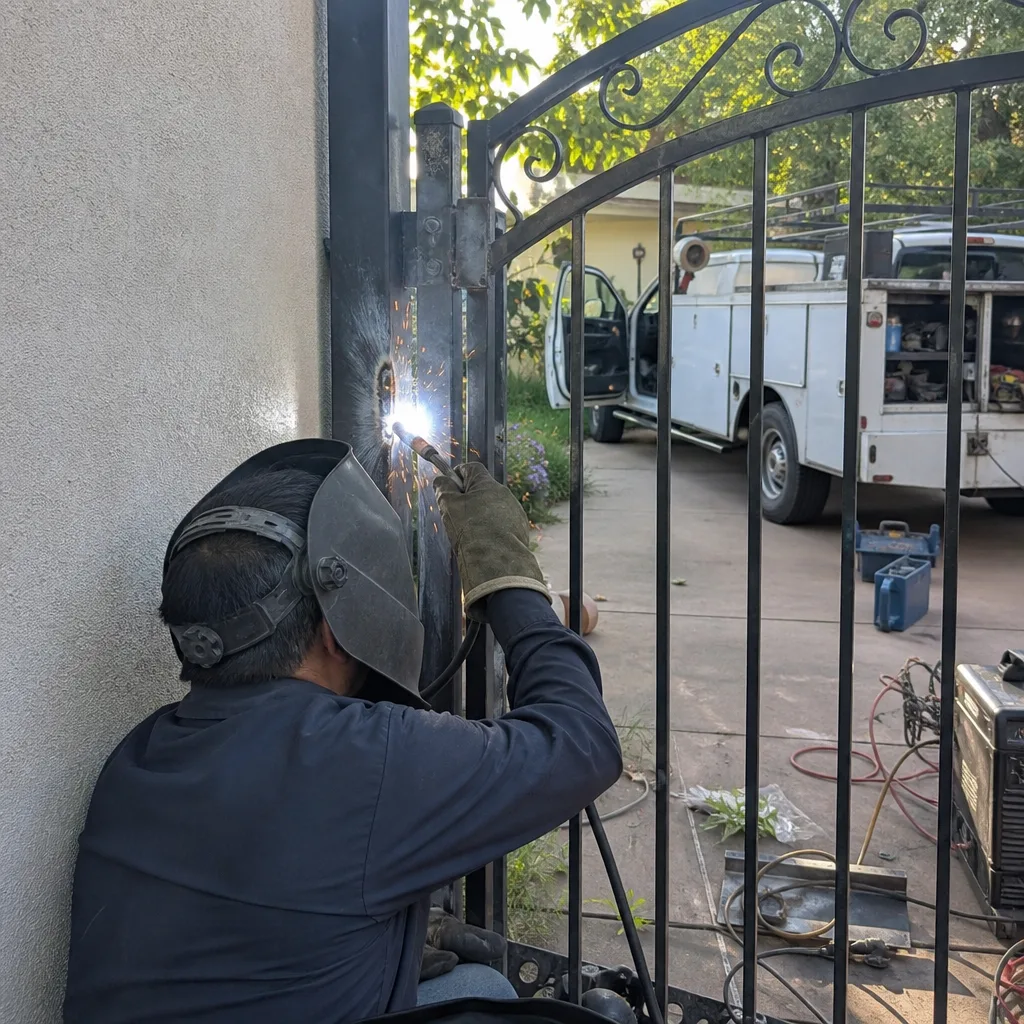
UL 325 is the safety standard governing all automatic gate operators sold in the United States. It specifies entrapment protection requirements: the gate must detect an obstruction and reverse or stop, the force must not exceed a measured threshold, and the protection devices (photo-eyes, edge sensors, current-sensing circuits) must be tested and documented after any work that could affect them.
Here is the liability problem most Richmond homeowners do not discover until it is too late:
When a licensed gate technician in California installs or repairs an operator, they generate a compliance record. That record includes the make and model of the operator, the serial number, the entrapment protection devices installed, the force measurements at each point of travel, and the technician’s license number. If a child or delivery driver is injured by the gate, this record becomes evidence that the installation met the standard at the time of work.
A homeowner who performs the same repair has no mechanism to generate this record. The work may be technically correct. The photo-eyes may be perfectly aligned. But without a dated, licensed technician’s documentation, the homeowner cannot prove compliance. In a liability dispute, the insurance adjuster’s question becomes: “Who certified this gate as safe?” The answer “I watched a video and it seemed fine” does not satisfy.
We have seen this gap create real problems. In 2019, a Richmond homeowner in the El Sobrante hills replaced their own Viking operator after the original failed. The installation functioned for fourteen months. When a visitor’s hand was caught at the gate’s leading edge, the homeowner’s insurer denied the claim, citing the lack of professional installation records for a motorized access device. The homeowner paid the settlement out of pocket. The repair had been technically sound. The documentation had not.
This is why we draw the line at liability, not difficulty. Replacing an operator is not mechanically complex for many homeowners. It is legally exposed.
Repairs That Save Money Without Meaningful Risk
Some gate repairs offer genuine cost savings with no meaningful downside; explore our more guides & resources for deeper guidance. The key is identifying work that does not interact with safety systems, structural loads, or electrical supply.
Manual hardware replacement on non-automated gates. A pedestrian gate with no operator, common in Richmond’s older neighborhoods near the Richmond Greenway, is essentially a fence panel on hinges. Replacing the hinges, the latch, or the stop is carpentry or metalwork, not gate automation. The cost savings are real: a $12 hinge versus a $150 service call minimum.
Photo-eye cleaning and realignment by hand. If the LED on your photo-eye receiver is flickering or off, the first step is cleaning. Dust from Richmond’s summer-dry hills coats lenses. A dry microfiber cloth and visual alignment (both LEDs solid green or red, depending on brand) often restore function. Document the date and the LED status. If the problem returns within a week, the issue is likely voltage drop or mounting shift, which is professional territory.
Vegetation management. This sounds trivial until you have dispatched a technician to find a $175 bill for trimming a rosemary bush that grew across the beam path. Richmond’s growing season runs nearly year-round; quarterly clearing of the photo-eye corridor and the gate’s travel path prevents false obstructions and unnecessary service calls.
Remote and keypad battery replacement. A Ghost Controls keypad that beeps but does not transmit, or a DoorKing remote with diminished range, often needs only a fresh battery. Use the manufacturer-specified cell (usually a 12-volt A23 or a 3-volt CR2032), test from multiple distances, and note the replacement date. If range does not improve, the issue is antenna or receiver, not power.
Repairs Where DIY Risk Exceeds Cost Savings
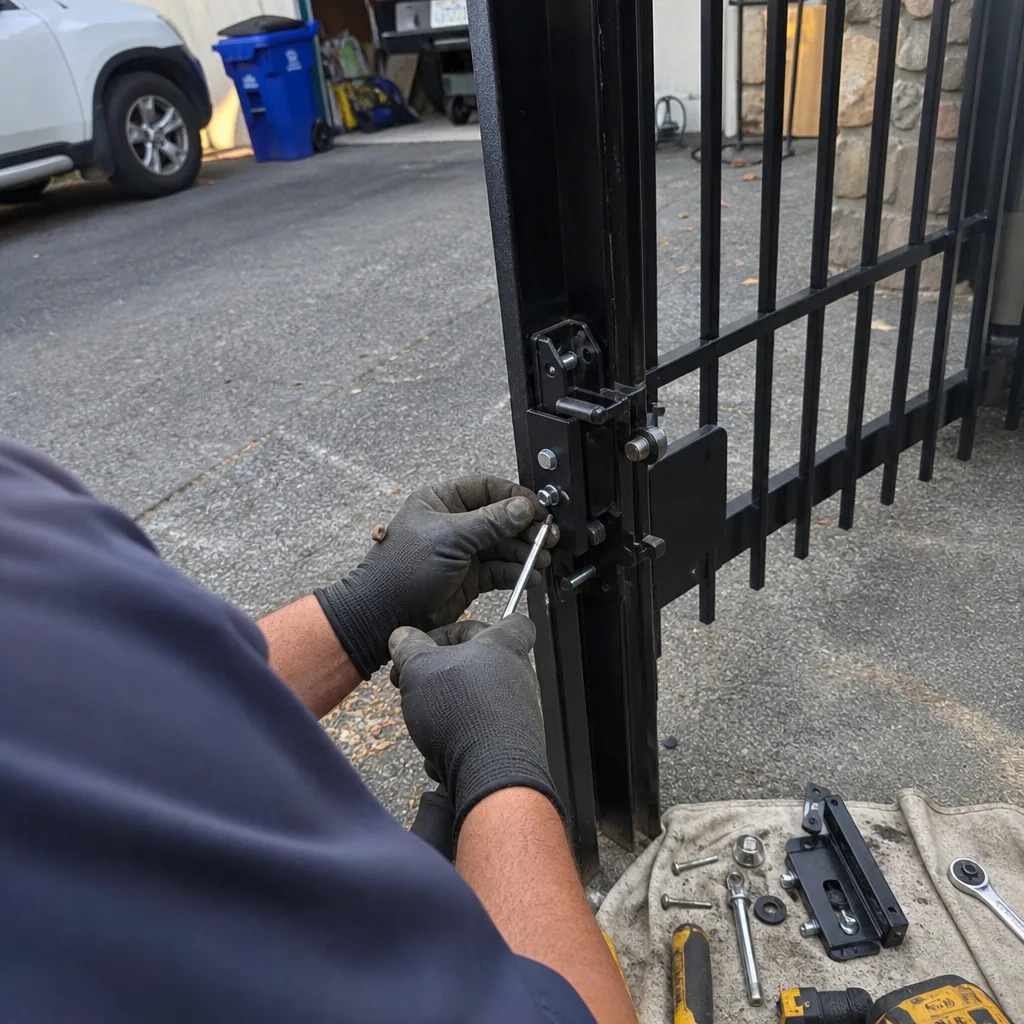
These repairs appear manageable but carry failure modes that can destroy the operator, injure a user, or create liability exposure that dwarfs the service cost.
Operator wiring and low-voltage connections. Gate operators run on 110-volt supply and produce 24-volt control circuits. The supply wiring must be in conduit rated for burial depth, which in Richmond’s East Bay climate means accounting for winter saturation and soil movement. The control wiring carries signals between the board, the motor, the photo-eyes, and the edge sensors. A reversed polarity on a photo-eye can disable the entrapment protection without any visible symptom. The gate opens and closes normally until it does not stop for an obstruction.
Limit-switch calibration. The limit switches tell the operator where the gate’s open and closed positions are. Set them too far, and the gate slams the mechanical stop, stressing the arm bracket or the gate frame. Set them short, and the gate does not fully close, creating a security gap. The calibration requires a meter or the operator’s diagnostic mode, and the settings must be recorded. In our documentation, we photograph the limit-switch position and note the degree setting. A homeowner who adjusts by feel has no record and no verification.
Post resetting in clay soil. Richmond sits on Bay Mud and alluvial clay that expands and contracts dramatically with moisture. A gate post that has tilted 3 degrees in winter may appear to straighten in summer, but the footing has already failed. Resetting the post requires excavation below the frost line (18 inches in this zone), a concrete footing with proper drainage, and verification that the post is plumb in both planes while the concrete cures. A post that appears straight but is not structurally anchored will tilt again, and the repeated stress will warp the gate frame or strip the operator’s arm bracket.
Spring and counterbalance work on heavy gates. A solid-core wooden driveway gate or a steel ornamental gate can weigh 400 pounds or more. The torsion or extension springs that assist the operator are under significant tension. A release without proper winding bars or clamps can cause serious injury. We do not recommend any homeowner attempt spring work on a gate heavier than a standard aluminum pedestrian gate.
Control board replacement or firmware updates. Modern operators from LiftMaster, FAAC, and BFT have programmable logic boards that store force profiles, travel limits, and entrapment sensitivity. Replacement requires transferring the settings or recalibrating from baseline. A board that is not properly configured for the gate’s weight and travel will pass casual testing but fail under the specific conditions that trigger entrapment.
Richmond’s Climate and Soil Factors That Change the Math
Richmond’s location on the eastern shore of San Francisco Bay creates conditions that alter gate repair calculations compared to inland California markets.
Marine corrosion accelerates hardware failure. The salt-laden air from the bay, particularly in neighborhoods west of I-580 like Point Richmond and the Richmond Marina, corrodes steel hinges, latch bolts, and operator housings faster than the Central Valley or inland East Bay. A hinge that lasts ten years in Walnut Creek may need replacement in seven in Richmond. DIY replacement is still appropriate, but the frequency is higher, and the hardware specification should account for it: stainless steel or hot-dip galvanized, not zinc-plated.
Clay soil movement affects post stability. Richmond’s soil profile includes expansive clays that swell when saturated and shrink during dry periods. The winter rains of 2022-2023 produced an unusual number of post-shift calls in the Richmond Hills and East Richmond areas. A gate that operated smoothly in October began binding by January. The binding was not hinge wear; it was post tilt from soil movement. Adjusting the hinges or the operator limits to compensate masks the structural problem and accelerates frame distortion. This is a professional diagnosis, not a DIY adjustment.
Wind load on hillside installations. Gates in the Richmond Hills and El Sobrante-facing properties catch afternoon bay winds that flatland gates do not. A swing gate with a standard operator may need a heavier-duty arm or a wind-resistant bracket. Installing an undersized operator to save money creates a strain condition that voids the manufacturer’s warranty and produces premature failure. The correct specification requires measurement of gate weight, width, and wind exposure, which is part of professional Gate Installation in Richmond.
Proximity to industrial electrical noise. Richmond’s legacy as an industrial center means some residential areas, particularly near the former Chevron corridor and the port facilities, have electrical noise that can interfere with gate operator radio receivers. A remote that works intermittently may not need a new battery; it may need a receiver with better noise filtering or a hardwired keypad as backup. Diagnosing this requires a signal strength meter and knowledge of local interference patterns.
If You DIY, Create Documentation That Protects You
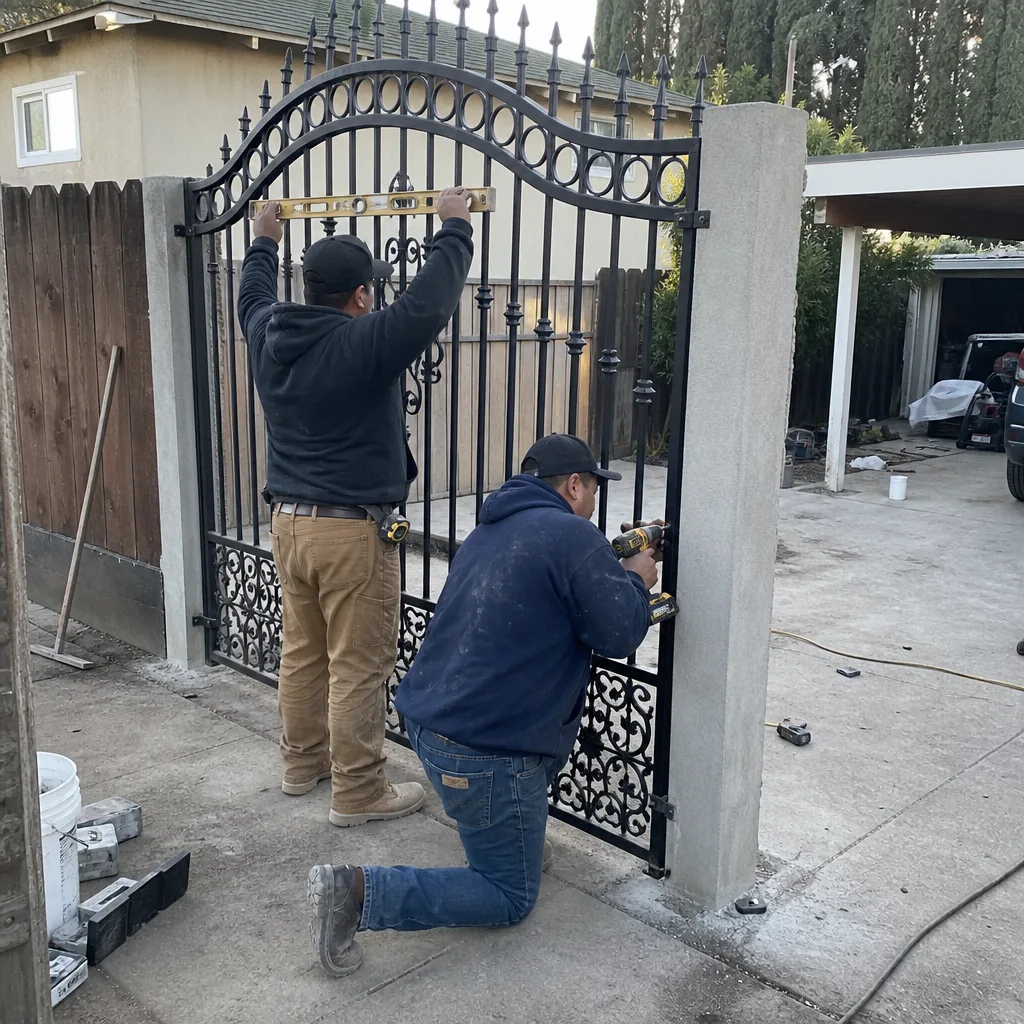
If you complete a repair yourself, create a record that a future professional technician can use as a baseline. This protects you in two ways: it reduces the diagnostic time (and cost) of a future service call, and it demonstrates diligence if a liability question ever arises.
- Photograph the condition before you start. Wide shot showing the full gate and operator, close-up of the specific component, and any nameplate with model and serial numbers. Date-stamp the images or note the date in a file.
- Record exactly what you did and when. “January 15, 2025: Replaced lower hinge on pedestrian gate with National Hardware N130-294 stainless steel hinge. Previous hinge showed 3/16-inch play at pin. Gate now swings freely, no binding.”
- Note any symptoms that remain. “Operator still pauses 2 seconds before opening from keypad. Remote works immediately. Suspect keypad wiring or receiver delay, not urgent.”
- Retain packaging and receipts. Part numbers, purchase dates, and warranty terms belong in the file. If a component fails prematurely, you have proof of purchase and specification.
- Test and record the safety systems. Even if you did not touch the operator, verify that the photo-eye stops the gate when blocked and that the gate reverses on contact with a test object (a soft foam roller, not your hand). Note the test date and result.
- Mark your calendar for follow-up inspection. Most DIY repairs should be re-examined at 30 and 90 days. Check for loosening, corrosion, or new symptoms. Document what you find.
This documentation habit mirrors what we provide under Vance Gate Repair Richmond home service: a photographed record of what was found, what was done, and what was left behind. We developed this practice on commercial access-control sites starting in 2014, and we apply it to every residential job. A homeowner who adopts the same discipline gains protection and reduces future service costs.
Common Mistakes to Avoid
- Adjusting the operator’s force setting to compensate for mechanical binding. When a gate starts sticking, the operator’s force adjustment is not the solution. Increasing force to push through a binding hinge or a tilted post masks the structural problem and creates an entrapment hazard. The correct step is to find and fix the binding.
- Reversing photo-eye wires to “fix” a polarity issue. Photo-eyes from different manufacturers use different wire colors. Guessing based on a generic diagram can disable the safety beam while leaving the LED lit. The gate appears protected; it is not.
- Ignoring the concrete footing when a post tilts. Richmond’s clay soil makes this especially tempting: the post seems to straighten in summer, so the problem is “solved.” It is not. The footing has failed, and seasonal moisture variation will continue the cycle until the post fractures or the gate frame warps.
- Buying an operator based on price without matching lift capacity to gate weight. A “heavy-duty” operator from a big-box store may be rated for 800 pounds of static load but only 400 pounds of dynamic load with a 16-foot wing. An ornamental steel gate in a Richmond Hills wind exposure can exceed that during operation. Undersizing produces strain, noise, and early failure.
- Skipping the entrapment protection test after any adjustment. California law and UL 325 require functional entrapment protection. A homeowner who adjusts limits, replaces a board, or even swaps a battery in a wireless edge sensor should verify that the protection still works. Most do not test; some do not know how.
- Using non-gate hardware for structural repairs. A standard lag bolt from a hardware store is not a gate hinge bolt. The shear load, the corrosion exposure, and the cyclic stress are different. Gate hardware is specified for the application; substitutions fail prematurely and sometimes catastrophically.
When to Call a Professional
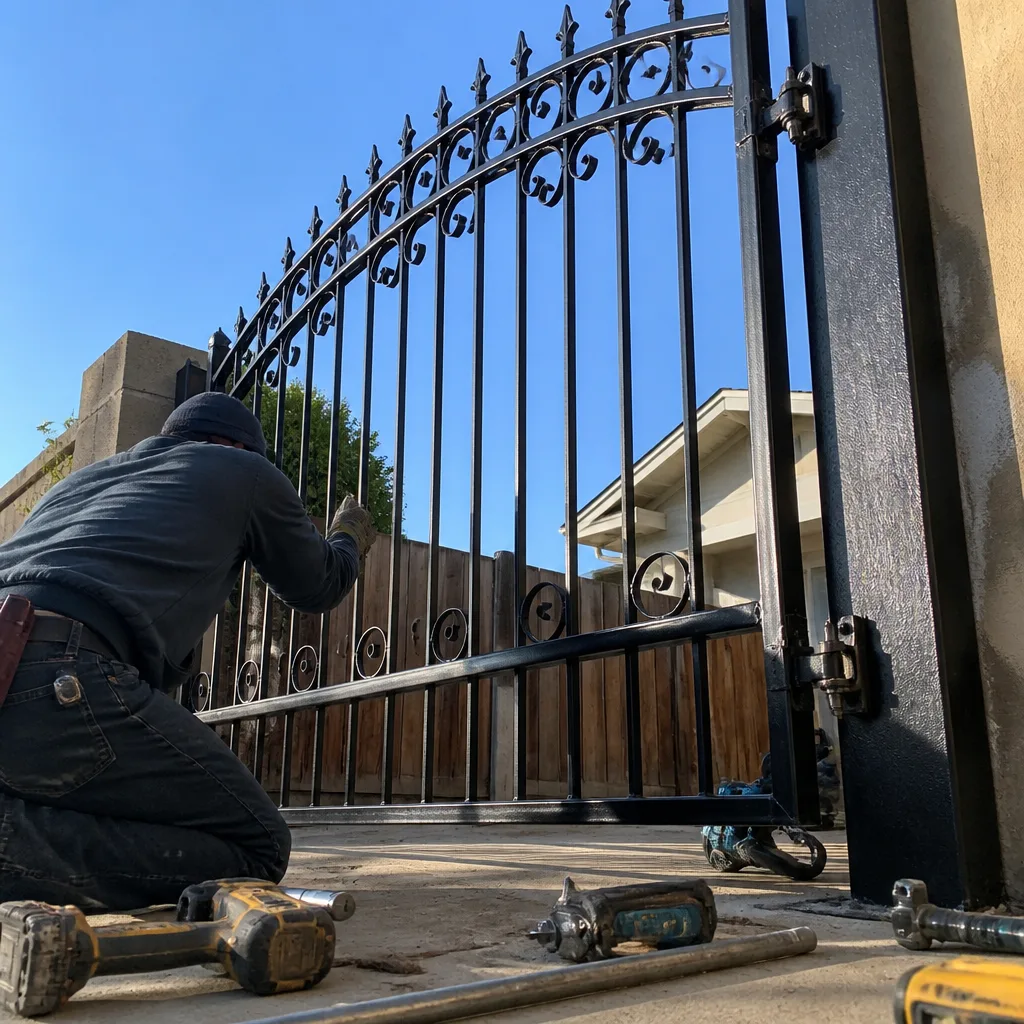
Call a licensed gate technician when the repair involves operator wiring, entrapment protection devices, post or footing work, or any condition where a failure could injure someone or expose you to liability. In Richmond, this includes most operator-related problems, any gate that has shifted in clay soil, and any installation of a new automated gate where UL 325 compliance documentation will be required for insurance or resale.
Vance Gate Repair Richmond offers our Gate Repair services with free estimates in Richmond. We will review your gate, identify the specific problem, and provide a written price before any work begins under Haven Standard Clause 1. If you have a written estimate from another company, we provide a free second opinion. Call (510) 944-0953 to schedule.
Frequently Asked Questions
Most residential gate repairs in Richmond range from $195 to $485, depending on whether the issue is mechanical (hinge, latch, track) or operator-related (board, motor, entrapment protection); see our Gate Repair Cost Breakdown: The Richmond Homeowner’s Reference for 2026 for detailed pricing factors. Motor replacement typically runs $850 to $2,400, varying by brand and whether the arm bracket and safety devices are reusable. We provide a written, itemized price before any work starts. Call (510) 944-0953 for an exact quote on your specific gate.
Yes, California law allows homeowners to install their own gate operators on their own property. However, you cannot generate a UL 325 compliance record, and your homeowner’s insurance may deny a claim if the gate injures someone and no licensed technician’s documentation exists. The legality of the installation and the liability coverage if it fails are two different questions.
UL 325 is the safety standard that governs automatic gate operators in the United States. It specifies entrapment protection requirements: the gate must detect obstructions and reverse or stop, and the force must stay below measured thresholds. For Richmond homeowners, it matters because insurance claims and personal injury lawsuits after a gate incident often hinge on whether the installation was documented as compliant by a licensed professional.
Check the LED indicators on both the transmitter and receiver: both should show steady illumination (color varies by brand). Then, with the gate in motion, block the beam with an object at least 12 inches in diameter. The gate should stop or reverse within 2 seconds. Test monthly and after any work on the gate or operator. If the LEDs flicker or the gate fails to respond, call a technician; intermittent photo-eye failure is a common precursor to entrapment incidents.
Yes. Richmond’s marine air accelerates corrosion on steel components, and the clay soils in hillside neighborhoods shift with seasonal moisture. We recommend quarterly inspection of hinges and latches for rust, annual verification of post plumb, and immediate professional evaluation if a gate that operated smoothly in fall begins binding in winter. These patterns are common in Point Richmond, Richmond Hills, and El Sobrante-facing properties.
Request a written record that includes the technician’s license number, the operator make/model/serial number, the entrapment protection devices installed, the force measurements at open and close positions, and photographs of the completed work. Under Haven Standard Clause 4, Vance Gate Repair provides this on every visit at no additional charge. If your current provider does not document their work, you lack evidence of compliance if a liability question arises.
The Bottom Line
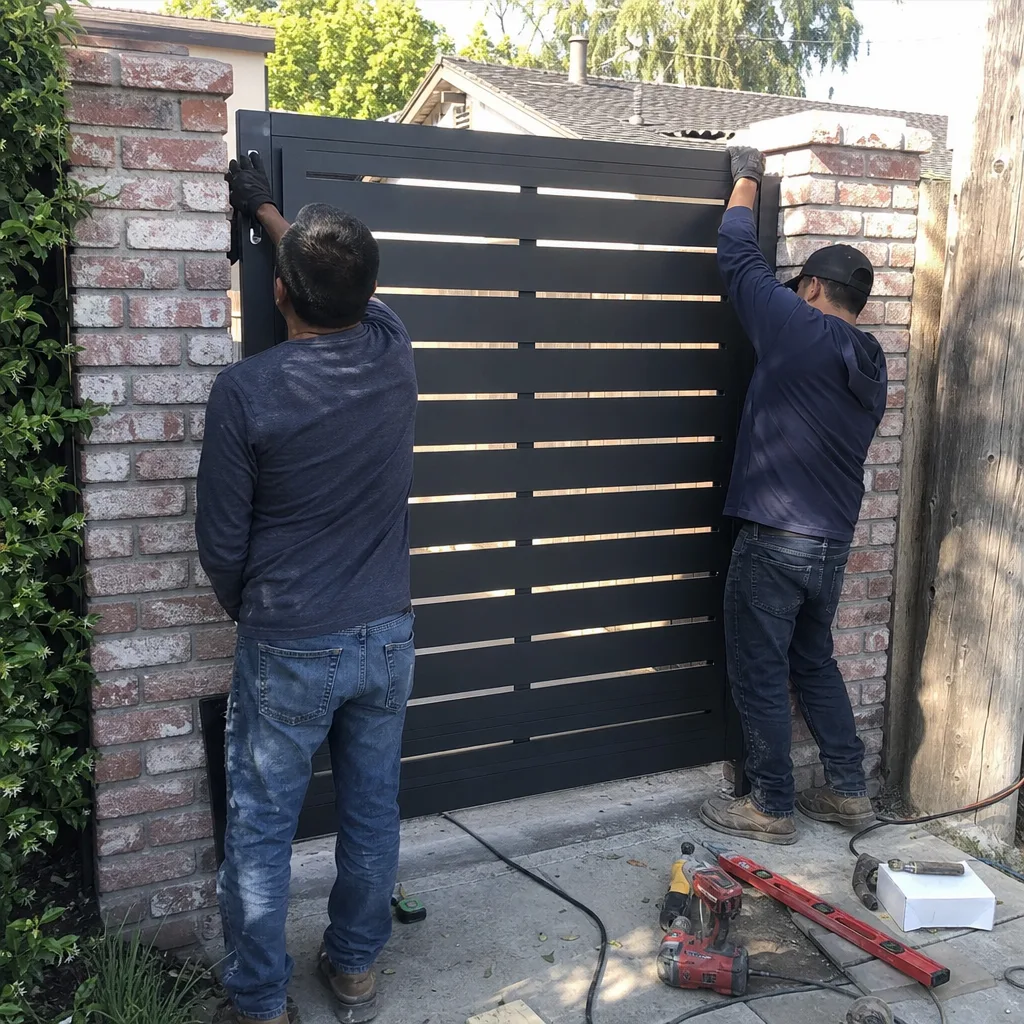
The DIY-versus-professional question for Richmond gate repair is not a test of your mechanical ability. It is a question of where the liability sits if something goes wrong. Manual hardware, cleaning, and vegetation management are genuinely yours to handle. Operator work, entrapment protection, and structural repairs transfer legal risk to a licensed technician who can generate the compliance record your insurance expects. Document everything you do yourself, consult our Gate Repair Maintenance Checklist for Richmond Homeowners, and know the line where documentation becomes a professional requirement. The cost of a service call is known. The cost of an uncovered liability claim is not.
Written by Adrian Vance, Owner at Vance Gate Repair Richmond, serving Richmond since 2014.